
Collecting Canines
Vintage Chalkware Dog Figurines: Collector’s Guide to American Folk Art
What Are Vintage Chalkware Dog Figurines?
Vintage chalkware dog figurines are hand-painted plaster-of-Paris sculptures produced in the United States from roughly the 1840s through the mid-twentieth century. Despite their modest materials — chalkware is essentially chalk (calcium carbonate) mixed with water and poured into molds — the best vintage chalkware dog figurines are among the most charming and historically rich American folk art objects a collector can find. They were painted by hand, sold at country fairs and general stores, and displayed in American homes long before the era of mass-market ceramic figurines.
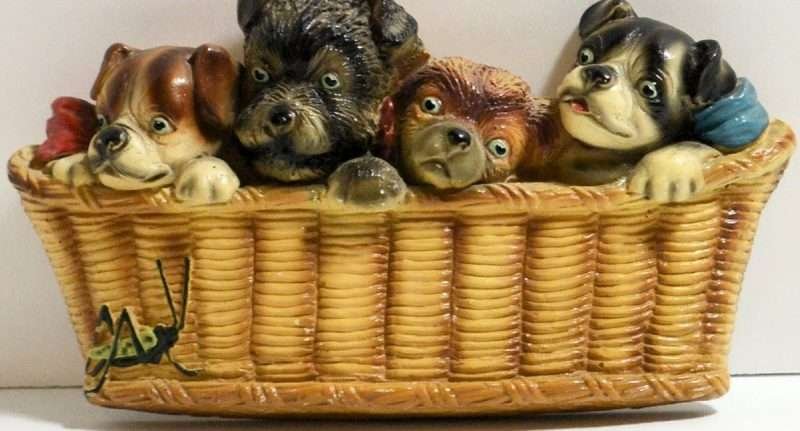
Today, vintage chalkware dog figurines occupy a special place in the collecting world. They are approachable in price, genuinely historical, and available in enough variety to make focused collecting rewarding. They are also fragile — and that fragility means that well-preserved examples are increasingly scarce, which gives serious collectors a reason to act when good pieces appear.
The American Folk Art Origins of Chalkware
Chalkware has deep roots in American folk art. The tradition arrived with German and Italian immigrants who brought mold-casting techniques with them in the early nineteenth century. Street vendors — often Italian immigrants in East Coast cities — sold plaster figures from pushcarts and baskets, offering affordable decorative objects to working-class households that could not afford imported porcelain or carved wooden figures.
By the mid-nineteenth century, chalkware figures had become fixtures of American domestic life. Cats, deer, parrots, fruit, and — critically — dogs appeared in the catalogs of chalkware makers across the Northeast and Mid-Atlantic states. These pieces were never intended to last forever; they were affordable popular art, the equivalent of today’s inexpensive home décor. The fact that any have survived in good condition is remarkable, and surviving examples in original paint are genuinely scarce.
The tradition continued into the twentieth century, evolving into the carnival chalkware prizes that midway game booths distributed from the 1910s through the 1950s. These later pieces are related to the folk art tradition but generally less refined, and collectors typically distinguish between the two categories.
Types of Vintage Chalkware Dog Figurines
Collectors generally divide vintage chalkware dog pieces into several categories based on era, style, and likely origin:
Nineteenth-century folk art chalkware: These are the earliest and most valuable pieces — hand-molded and hand-painted between roughly 1840 and 1900. Seated spaniel-type dogs, representing a direct influence from Staffordshire pottery designs, appear most frequently. Other breeds include generic terrier-type dogs and occasional representations of specific working breeds. Colors are typically bold — red, yellow, black, and green applied in flat, graphic washes that reflect the aesthetic of American folk art rather than the naturalistic painting of European ceramics.
Early twentieth-century commercial chalkware: As industrial production methods improved, chalkware became more uniform and less individual. Pieces from 1900–1940 tend to be better preserved (they are not as old) but generally less valuable than their nineteenth-century counterparts. More breed diversity appears in this period, reflecting the growing popularity of dog shows and breed culture in early twentieth-century America.
Carnival chalkware prizes: From the 1920s through the 1950s, game booths at carnivals and fairs distributed chalkware prizes — large, brightly painted figures designed for visual impact rather than quality. Dog subjects were extremely popular carnival prizes, and these pieces are very actively collected, particularly in specific breeds or subjects that resonate with collectors.
Identifying Authentic Vintage Chalkware Dog Figurines
The chalkware market has its share of later reproductions, and some period pieces have been repainted or “freshened” in ways that significantly affect their collector value. Authentication requires attention to several factors:
Weight and feel: Genuine chalkware has a distinctive weight — lighter than ceramic, heavier than modern resin reproductions. The surface has a slight chalky, matte texture under the paint rather than the smooth, slightly glossy feel of modern resin.
Paint quality: Original period paint on nineteenth-century chalkware has a specific quality that develops only with age — slight checking, subtle loss in high-wear areas (the tops of ears, the bridge of the nose, prominent edges), and a patina that interacts with the plaster surface in ways that fresh paint does not replicate convincingly. Examine under good raking light.
UV light examination: Original nineteenth and early twentieth-century paints fluoresce differently from modern paints under ultraviolet light. A UV blacklight is one of the most useful tools for any chalkware collector — original paint typically glows differently from touch-up or repainted areas, making even skillful repairs visible.
Mold seams and construction: Vintage chalkware was poured in two-part molds, and the mold seam — typically running down the sides of the figure — should show period-appropriate finishing. Lightly sanded or tooled seams are typical; completely invisible seams on old pieces may indicate later work.
Condition Standards for Chalkware Collecting
Chalkware is fragile, and condition grading matters more here than in almost any other collecting category. The standards collectors apply:
Original paint intact: The most critical factor. Chalkware with full original paint, even with minor surface wear, is significantly more valuable than repainted examples. “Original paint” means no touch-ups, no repainting, no varnishing over the surface to freshen the appearance.
Structural integrity: Cracks, chips, and breaks are common in chalkware. A clean break that has been sensitively stabilized (but not filled and repainted) is preferable to an untreated crack that is actively worsening. Significant structural repairs — particularly to major elements like heads, ears, or legs — must be disclosed and significantly affect value.
Surface condition: Dirt, grime, and environmental deposits can often be carefully removed from chalkware without disturbing the original paint. However, this is delicate work — aggressive cleaning removes paint along with dirt. When in doubt, leave it alone and consult a conservator.
Displaying and Caring for Chalkware Dog Figurines
The fragility that makes good chalkware scarce is also why care in display matters. A few practical guidelines:
Keep chalkware out of direct sunlight — period paint is more vulnerable to UV degradation than ceramic glazes. Avoid high-humidity environments; plaster absorbs moisture, and repeated cycles of wetting and drying cause paint to lift and eventually flake. Handle from the base when possible, and avoid contact with the painted surfaces.
Display chalkware on stable, padded surfaces away from traffic areas where vibration or accidental contact could cause damage. In glass-fronted cabinets, chalkware mixes well with other American folk art objects — painted tinware, carved wooden pieces, stoneware — creating a cohesive early American aesthetic.
For current pricing benchmarks and collector reference, Wikipedia: Chalkware Folk Art is an invaluable resource for anyone evaluating antique and vintage ceramics.
Frequently Asked Questions About Vintage Chalkware Dogs
How can I tell if my chalkware has been repainted?
UV blacklight is the most reliable tool — original period paint fluoresces differently from modern paint. Raking light examination reveals paint application differences. When in doubt, consult an experienced collector or conservator.
Are carnival chalkware dogs as valuable as folk art pieces?
Generally not, though exceptional carnival prizes in rare subjects can command significant prices. Nineteenth-century folk art chalkware in original paint is the top of the market.
What breeds appear most often?
Spaniel-type dogs (influenced by Staffordshire originals) dominate the nineteenth-century period. Carnival chalkware from the early twentieth century includes more recognizable breed likenesses — German Shepherds, Collies, Scotties, and Poodles were all popular prize subjects.
Where can I find authentic vintage chalkware dog figurines?
Browse our curated selection of vintage chalkware dog collectibles and our broader antique dog figurines collection. Each piece is individually described with condition notes — we never hide a flaw.
Ready to add a handpicked piece to your own collection? Browse our curated selection of antique dog figurines — each item chosen for authenticity, condition, and collector appeal.