
Collecting Canines
Antique Dog Figurines: A Collector’s Guide to Makers, Eras & Value
What Are Antique Dog Figurines?
Antique dog figurines are three-dimensional sculptures of dogs produced before 1930, representing every major ceramic tradition, sculptural material, and decorative style from the eighteenth century onward. The term covers an enormous range: from massive Meissen porcelain hunting dogs made for aristocratic dining tables in the 1730s, to small Victorian Staffordshire spaniels produced by the millions for working-class mantelpieces, to elegant Art Deco borzois from interwar French ateliers. What unites them is the subject — the dog — and the fact that across two centuries and dozens of countries, human fascination with the dog as a sculptural subject never wavered.
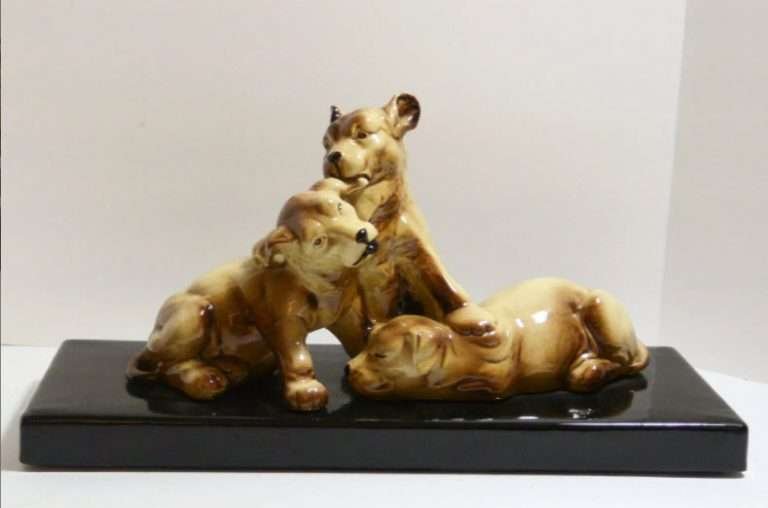
For collectors today, antique dog figurines represent one of the richest and most diverse areas of the decorative arts. You can collect by maker (Royal Doulton, Meissen, Mortens Studio), by breed (bulldogs, spaniels, terriers), by material (porcelain, chalkware, bronze), by era (Victorian, Edwardian, Art Deco), or by country of origin — or some combination of all of these. The collection never runs out of interesting territory.
A Brief History of Dog Figurines Through the Centuries
The Eighteenth Century — Aristocratic Originals: The European porcelain tradition that began at Meissen in 1710 quickly embraced animal subjects, and dogs — the companions of the aristocratic households that were the primary market for early porcelain — appeared from the earliest decades. Meissen’s hunting dogs, lap dog portraits, and theatrical pug figures set a standard of quality and naturalism that influenced every European factory that followed. Chelsea, Worcester, Derby, and the Continental factories all produced dog subjects throughout the eighteenth century.
The Nineteenth Century — Democratic Dogs: The great democratization of dog figurines came in the Victorian era, when improvements in ceramic production technology made it possible to manufacture figurines at a price point accessible to the working class. Staffordshire pottery in England became the center of this production: the famous Staffordshire spaniel — a seated King Charles or Cavalier type, often in red and white — became the most produced decorative ceramic object in Victorian England. Literally millions were made, and yet good examples in original condition remain desirable.
The Victorian era also brought dog fairings (small prizes made in Germany for English fairs), early chalkware dogs in America, and a proliferation of breed-specific figures reflecting the growing popularity of organized dog shows and breed culture that began with the Kennel Club’s founding in 1873.
The Edwardian Era — Quality and Variety: The early twentieth century saw the establishment of many of the makers that collectors prize most today: Royal Doulton’s figurine program expanded significantly, Scandinavian factories including Bing & Grøndahl and Royal Copenhagen developed their distinctive naturalistic animal figurine traditions, and German factories — Rosenthal, Hutschenreuther, Goebel — began producing the quality breed figurines that remain highly collectible.
The Interwar Period — Art Deco Peaks: The 1920s and 1930s represent a golden age for dog figurines. Art Deco’s embrace of bold form and stylized elegance suited dog subjects perfectly, and the period produced some of the most visually striking antique dog figurines ever made: French bronze sighthounds, German porcelain greyhounds, English pottery Scotties, and the broad output of mid-century American firms like Mortens Studio that would define a generation of dog collecting.
Key Makers in Antique Dog Figurines
Navigating the antique dog figurine market is easier when you know the major names. These are the makers that appear most frequently and command the most consistent collector interest:
Meissen (Germany, 1710–present): The originator of European hard-paste porcelain, Meissen set the standard for quality and naturalism that all later factories aspired to match. Eighteenth and nineteenth-century Meissen dog figurines are museum-quality objects commanding museum-level prices.
Staffordshire potteries (England, 1800s–1930s): “Staffordshire dog” has become synonymous with the seated spaniel type that was produced by dozens of factories across the English Potteries region. These pieces range from rare, early, high-quality examples to common later pieces — knowing the difference matters enormously.
Royal Doulton (England, 1815–present): Royal Doulton’s dog figurine program spans over a century and is the most comprehensively documented in the field. HN numbers provide precise identification, and the range of subjects — from bulldogs to Cecil Aldin character dogs — is extraordinary.
Bing & Grøndahl and Royal Copenhagen (Denmark): The Danish ceramic tradition produced some of the finest naturalistic dog figurines of the early twentieth century. Their work is characterized by exceptional paint quality, accurate anatomy, and a quiet elegance that suits contemporary interior styles beautifully.
Rosenthal (Germany): Rosenthal’s figurine program, which employed significant sculptors, produced both naturalistic and Art Deco-influenced dog figurines of very high quality. The range and variety of their output makes them a fascinating collecting focus.
Mortens Studio (USA, 1940s–1970s): The quintessential American mid-century dog figurine maker, Mortens Studio combined lifelike poses with affordable production in a range that covered virtually every popular breed. Their wire-armature construction and characteristic crazing make them instantly recognizable.
How to Evaluate Antique Dog Figurines
Buying antique dog figurines well requires attention to several factors:
Authenticity: The base mark is the starting point for any evaluation. Research the specific factory mark format for the period you are considering, and verify the mark against documented reference examples. UV light examination can reveal repairs or overpainting that may obscure damage.
Condition: Chips, cracks, and repairs affect value significantly in fine antique ceramics. The standard is always: disclose everything, value accordingly. A common piece in perfect condition outperforms a rare piece with significant damage.
Rarity: Within any maker’s output, some subjects are more scarce than others. Understanding which breeds, models, and color variants are rare within a specific factory’s catalog is one of the skills that distinguishes advanced collectors.
Provenance: Documentation of prior ownership — particularly from significant collections or reputable dealers — adds to confidence in authenticity and to the historical interest of any piece.
For current pricing benchmarks and collector reference, Kovels’ Price Guide is an invaluable resource for anyone evaluating antique and vintage ceramics.
Frequently Asked Questions About Antique Dog Figurines
What makes a dog figurine “antique” versus “vintage”?
By convention, “antique” means over 100 years old — so pieces made before 1925 qualify today. “Vintage” covers roughly 1925–1980. Both categories are actively collected; the distinction matters most at customs and in formal appraisal contexts.
Which breeds are most commonly found in antique figurines?
Spaniels (particularly King Charles types), terriers, and generic companion dogs dominate Victorian-era production. Sighthounds (Borzoi, Greyhound) are common in Art Deco-era pieces. Breed diversity increases significantly in the twentieth century as breed culture developed.
How do I start collecting antique dog figurines?
Begin by learning one maker or era thoroughly before branching out. Read the literature for your chosen area, handle as many pieces as possible to develop an eye for quality and condition, and buy from dealers who disclose condition honestly.
Where can I find antique dog figurines for sale?
Browse our curated antique dog figurines collection, explore our range sorted by maker, era, and breed. Every piece is one of a kind and condition-described — we never overstate quality.