
Collecting Canines
European Porcelain Dog Figurines: A Collector’s Guide to the Continent’s Finest Makers
European Porcelain Dog Figurines:
A Collector’s Guide to the Continent’s Finest Makers
By Donna at A Dog’s Tale Collectibles
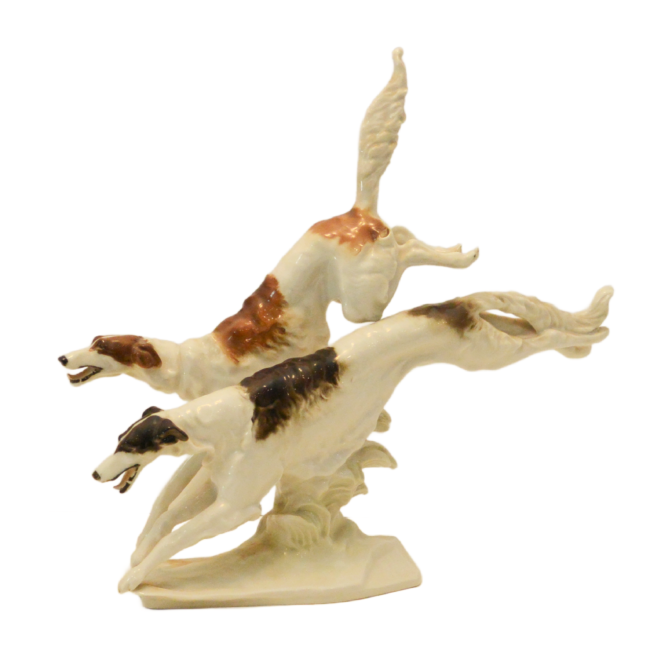 |
Hutschenreuther Running Borzois by Karl Tutter — Currently in Our Shop |
If you’ve ever held a European porcelain dog figurine in your hands, you know the feeling. There’s a weight and warmth to it — a sense that you’re holding something made with real care by a real artist, in a studio with centuries of tradition behind it.
European porcelain dog figurines aren’t just beautiful objects. They’re miniature works of art, each one carrying the signature style of the house that created it.
Whether you’re a longtime collector looking to deepen your knowledge, someone who loves decorating with antiques that have a story, or simply a dog lover who appreciates fine craftsmanship — this guide will walk you through the major European porcelain houses and what makes each one special. You’ll find tips on how to identify makers’ marks, what to look for when buying, and how to care for your treasures once they’re home. | 🔈 Listen |
What’s Inside This Guide
1. Rosenthal — The Art Deco Masters of Selb, Germany
2. Hutschenreuther — Karl Tutter and Dogs in Motion
3. Dahl Jensen & Royal Copenhagen — Scandinavia’s Treasures
4. Goebel — Whimsy and Warmth from Bavaria
5. Royal Doulton — Britain’s Best-Loved Dog Figurines
6. Other European Makers Worth Knowing
Rosenthal: The Art Deco Masters of Selb, Germany
Any conversation about European porcelain dog figurines has to start with Rosenthal. Founded in 1879 by Philipp Rosenthal in Selb, Bavaria, this studio became world-famous for its Art Deco animal figures in the 1920s and 1930s. Rosenthal’s dog figurines — particularly their Borzois (Russian Wolfhounds) — are among the most sought-after porcelain collectibles in the world.
The Sculptors Who Defined the Style
What makes Rosenthal pieces so distinctive? It starts with the sculptors. Artists like Fritz Heidenreich, Max Valentin, and Theodor Kärner brought a true sense of the nature of each breed, through their expressive, realistic faces, and their characteristic postures. A Rosenthal Borzoi doesn’t just sit there — it commands any space it occupies.
The glazes are typically creamy whites, and the grays, browns and touches of black that would be typical to the breed. These are the kind of pieces that stop you in your tracks at an antique show — and once you own one, it tends to become one of your favorites.
 |
One of Our Old Friends: Rosenthal Reclining Borzoi by Max Valentin c.1923 — Sold |
Reading the Rosenthal Mark
When you’re examining a Rosenthal piece, flip it over and look for the maker’s mark on the base. Rosenthal marks evolved over the decades, but most feature the company name in a distinctive script, often accompanied by a crown or wreath.
Pieces from the 1920s–1940s — the golden era for their dog figurines — typically show a green underglaze mark with “Rosenthal” and “Selb-Bavaria” or “Selb Germany.” The sculptor’s name or initials and a model number are often incised into the base as well.
 |
Example of a Rosenthal Maker’s Mark |
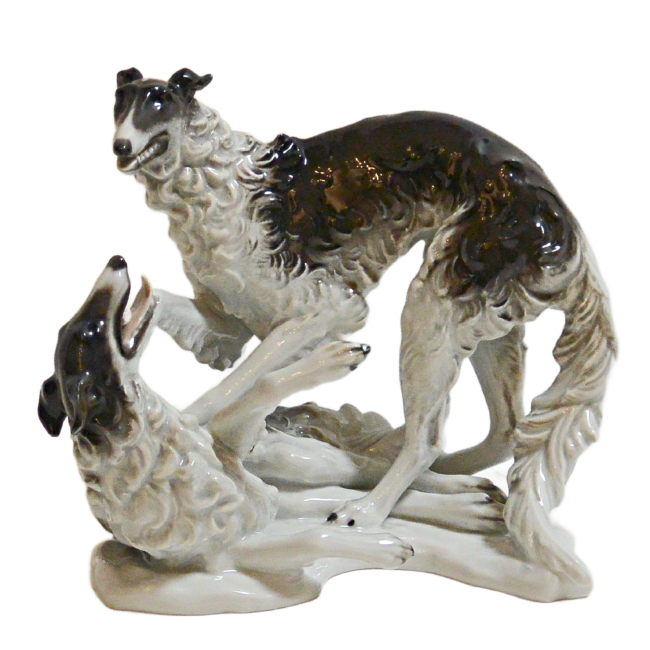 |
Rosenthal Art Deco Borzoi by F. Heidenreich — View in Our Shop |
|
Hutschenreuther: Karl Tutter and Dogs in Motion
Just a few miles from Rosenthal’s studio in Selb, Hutschenreuther was producing its own masterpieces. Founded even earlier — in 1814 — Hutschenreuther is one of the oldest porcelain manufacturers in Europe.
Karl Tutter’s Gift for Movement
It was sculptor Karl Tutter who put Hutschenreuther on the map for dog collectors. Tutter had an extraordinary gift for capturing dogs in motion. His running Borzois, leaping Greyhounds, and alert terriers have a fluid energy that makes them feel alive.
If Rosenthal’s dogs are elegant and poised, Hutschenreuther’s are dynamic and joyful. A Hutschenreuther Borzoi pair on your mantelpiece catches the light beautifully and becomes an instant conversation piece — guests always want to pick them up and look closer.
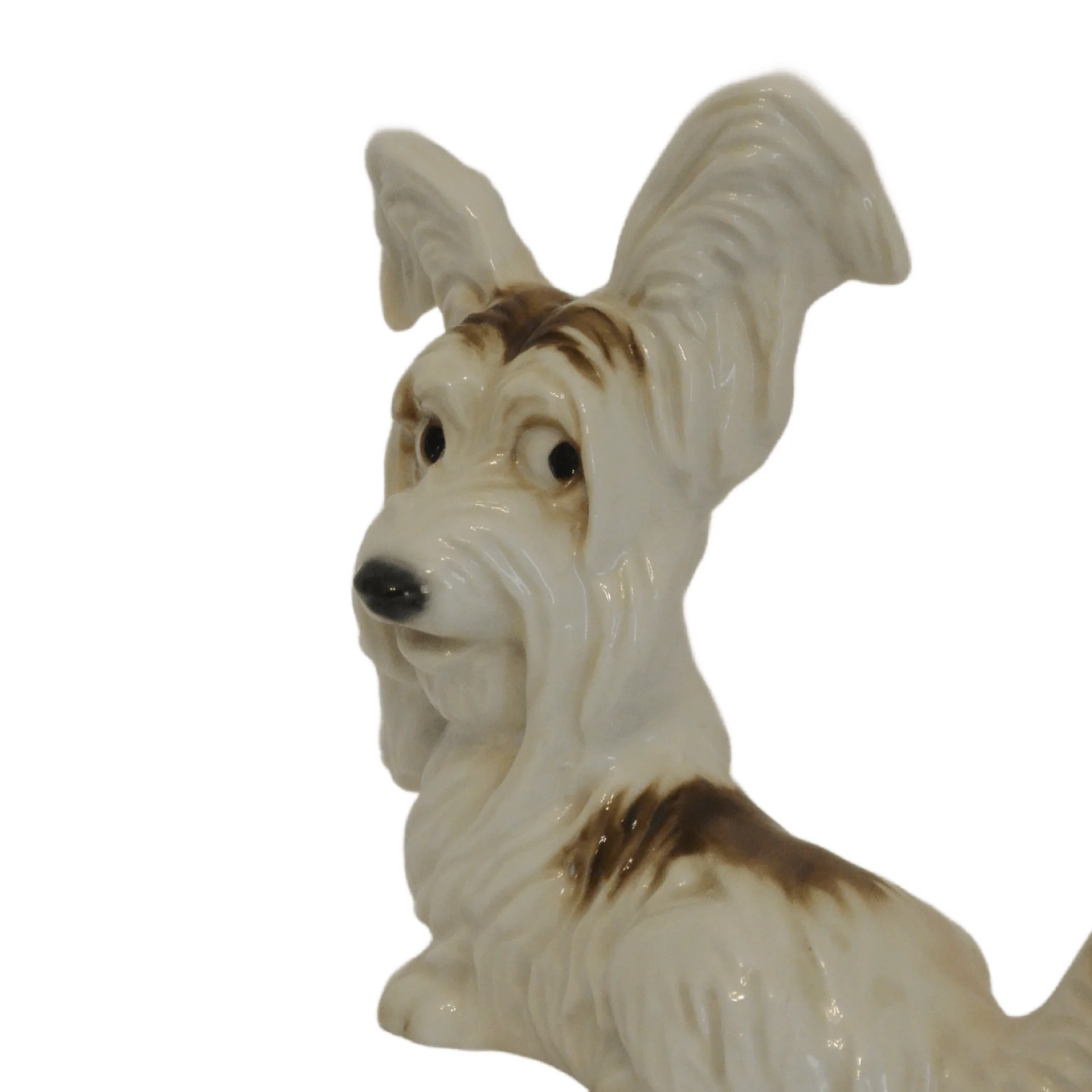 |
Hutschenreuther Skye Terrier — View in Our Shop |
Identifying the Hutschenreuther Mark
Hutschenreuther marks typically include a lion passant (a lion walking with one paw raised) along with “Hutschenreuther” and the location — either “Selb” or “Hohenberg.” Karl Tutter’s pieces are especially prized and will usually have his name or “K. Tutter” incised on the base.
 |
Example of a Hutschenreuther Maker’s Mark |
Dahl Jensen & Royal Copenhagen: Scandinavia’s Porcelain Treasures
Cross the border into Scandinavia and the style changes completely — but the quality is every bit as breathtaking. Dahl Jensen and Royal Copenhagen share a deep connection: Jens Peter Dahl-Jensen got his start as a sculptor at Royal Copenhagen before founding his own studio in 1925.
A Quieter, Luminous Beauty
Both houses are known for dog figurines with the gentlest, most heartwarming expressions you’ll ever see. Their signature palette of snowy whites and soft muted greys gives every piece a luminous, almost ethereal quality.
Where German porcelain tends toward bold drama, Scandinavian porcelain whispers — and that quiet beauty is exactly what makes it so captivating. These are pieces that collectors fall in love with the moment they see them.
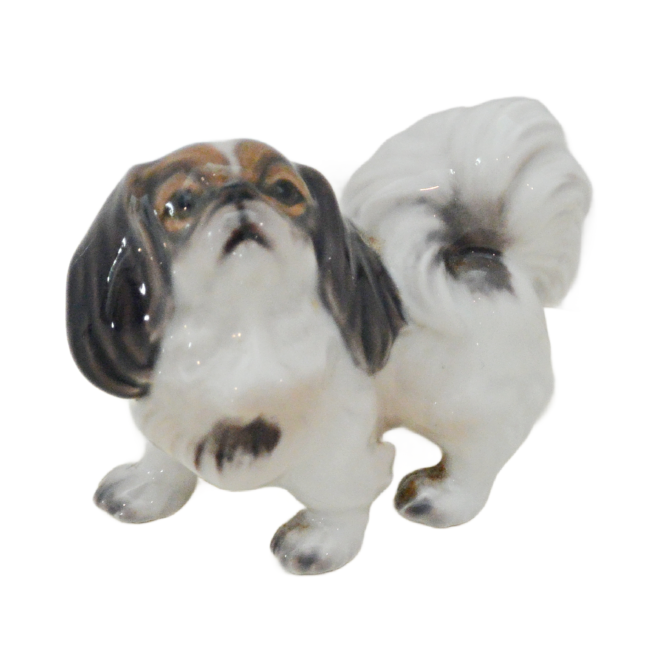 Dahl Jensen Pekingese No. 1146 — View in Our Shop |
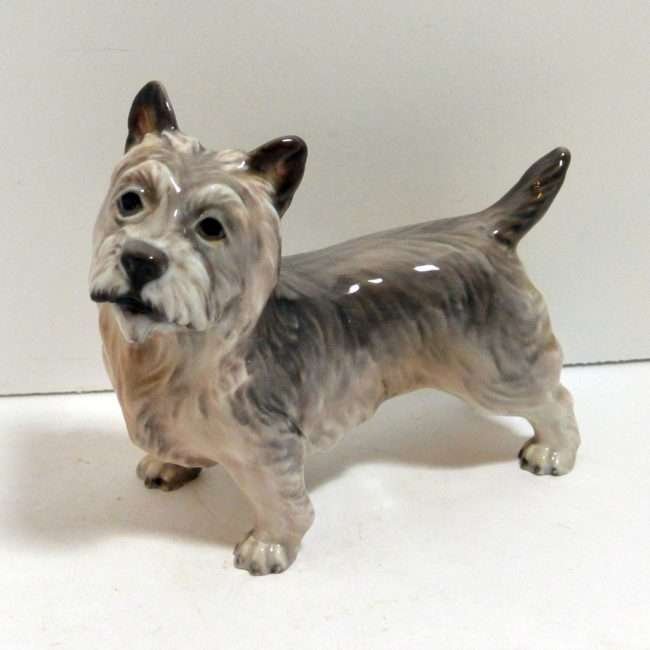 Old Friend: Dahl Jensen Cairn Terrier — Sold |
How to Tell Them Apart
Royal Copenhagen marks are among the easiest to identify: look for the famous three wavy blue lines (representing Denmark’s three waterways) painted under the glaze. Dahl Jensen pieces carry a “DJ” monogram with “Copenhagen” and “Denmark,” plus a model number. Both makers numbered their figurines, which makes identification and research much easier for collectors.
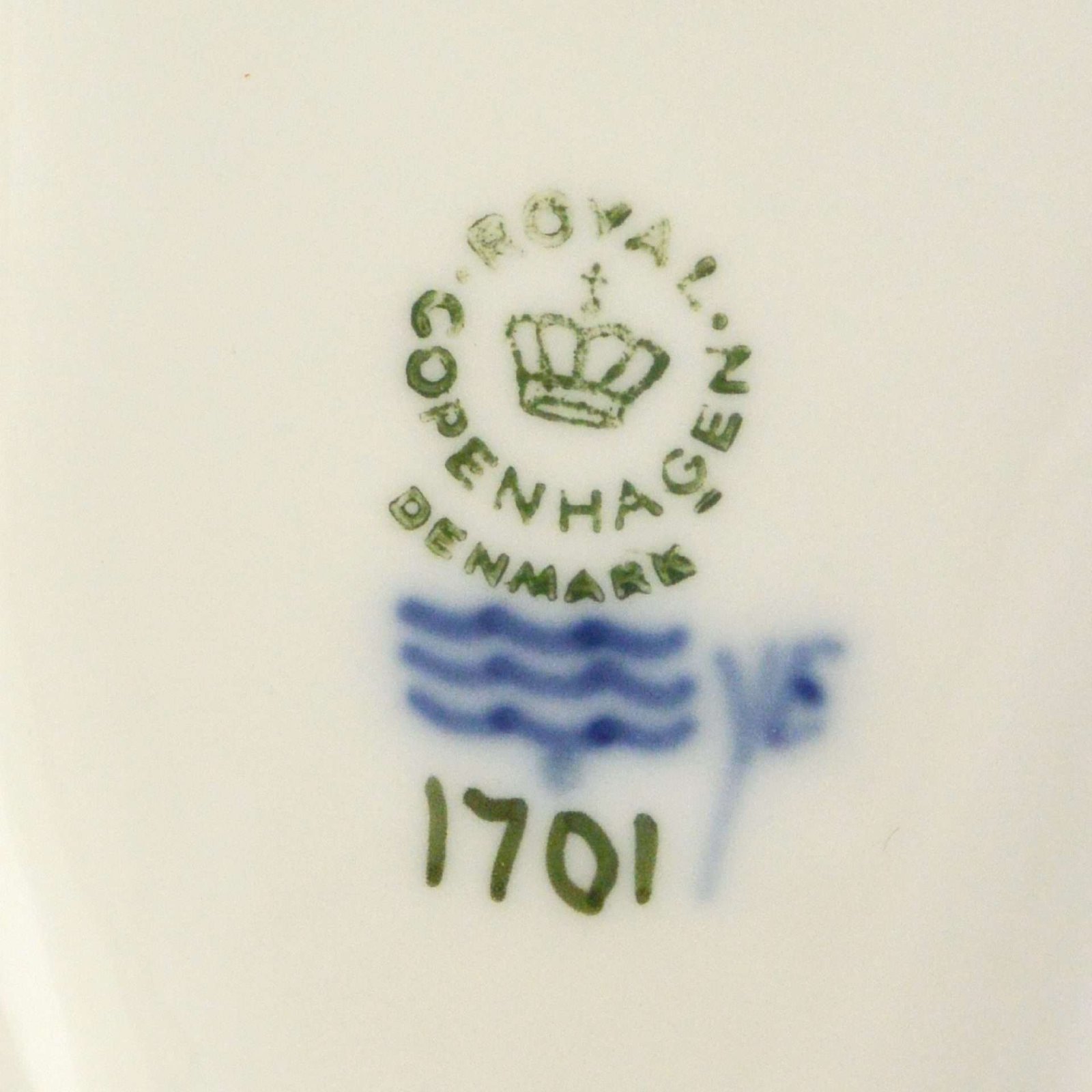 |
Example of a Royal Copenhagen Maker’s Mark |
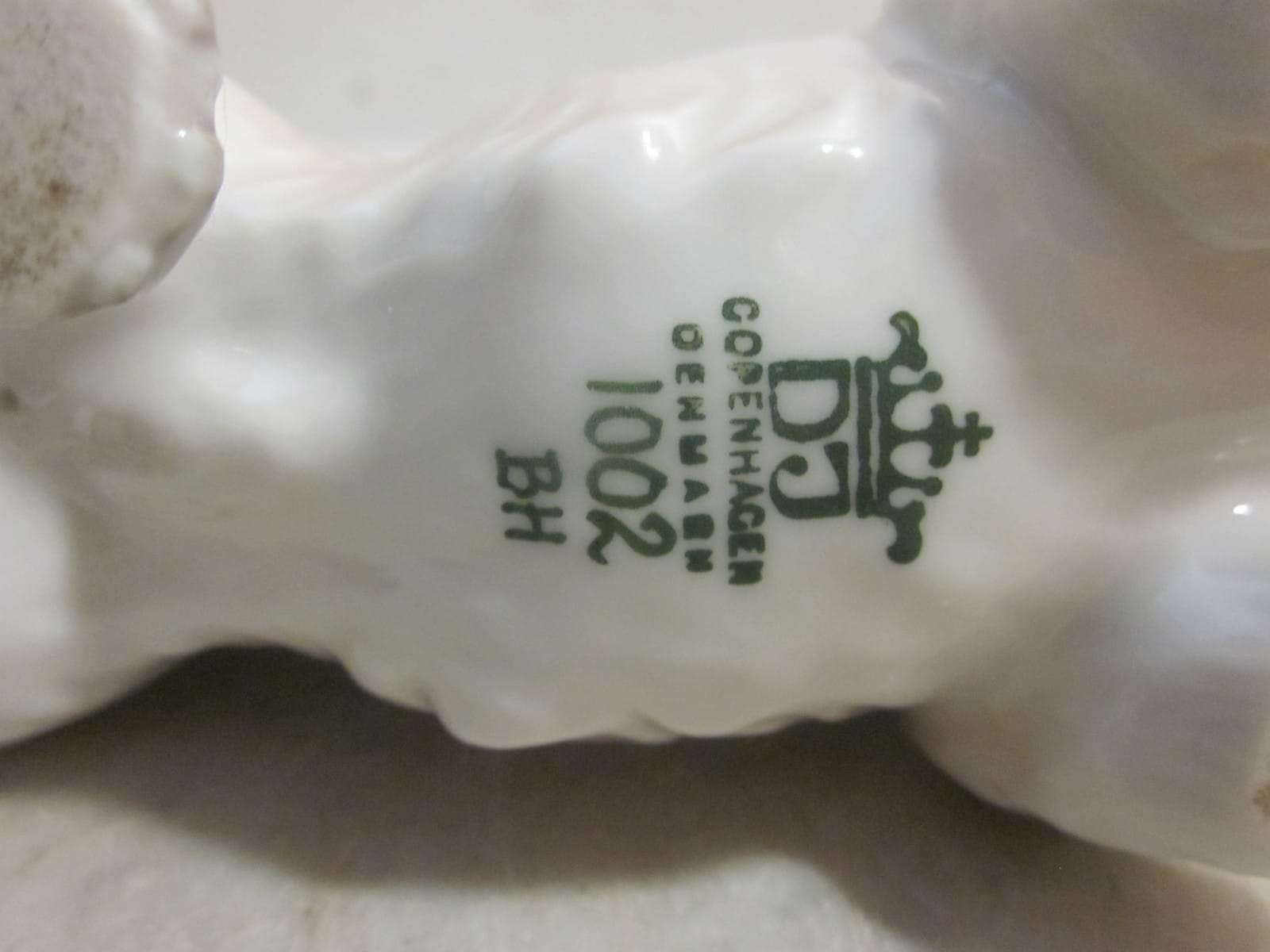 |
Example of a Dahl Jensen Maker’s Mark |
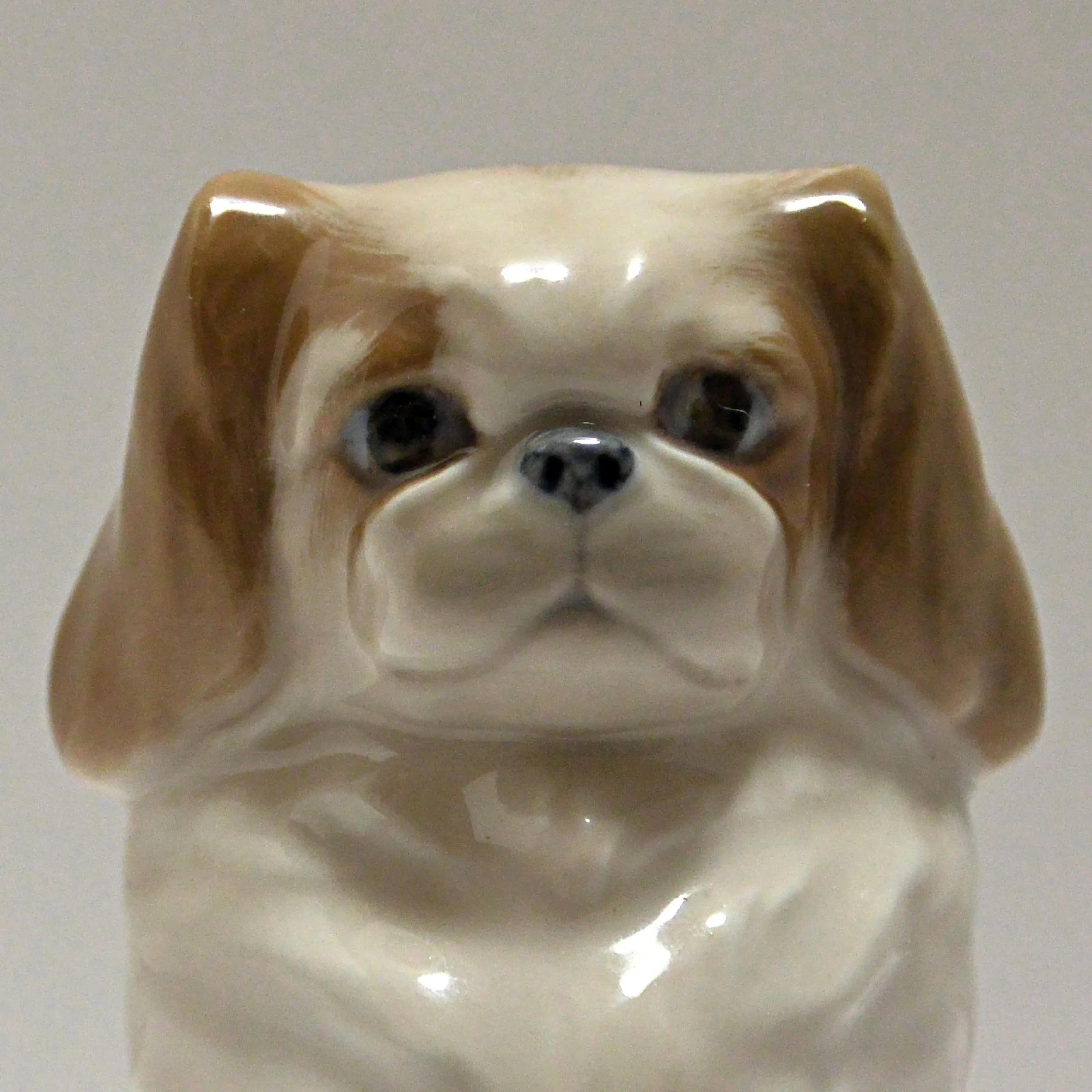 Royal Copenhagen Pekingese |
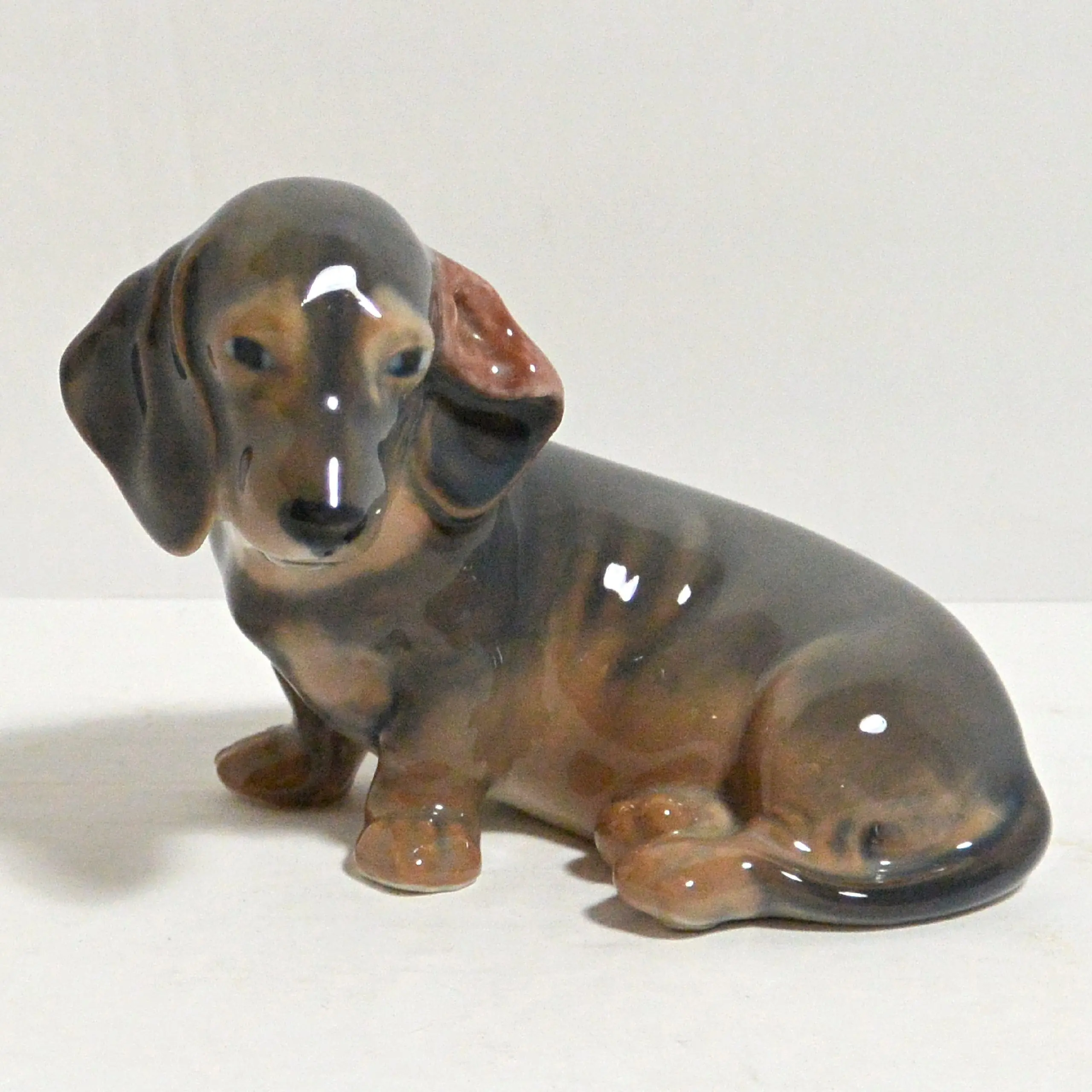 Royal Copenhagen Dachshund c.1923 |
|
Goebel: Whimsy and Warmth from Bavaria
Most people know Goebel for their M.I. Hummel figurines, but the Bavarian company also produced a wonderful line of realistic and whimsical dog figurines. The famous “Butch” series — a collection of cheerful, characterful Spaniels — is a particular favorite among dog collectors.
Personality in Every Piece
Goebel dogs tend to have a warmth and personality that’s instantly appealing. They’re the kind of pieces that make you smile every time you walk past them — perfect for a bookshelf, a side table, or as a thoughtful gift for the dog lover in your life.
They’re also very well made, with crisp details and rich, stable glazes that hold up beautifully over the decades. A vintage European porcelain dog is the kind of gift people never forget.
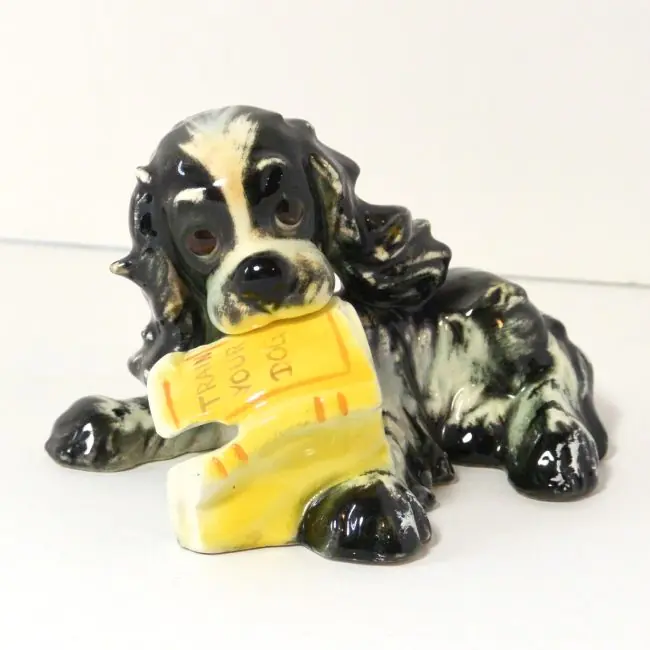 Goebel “Butch” Spaniel |
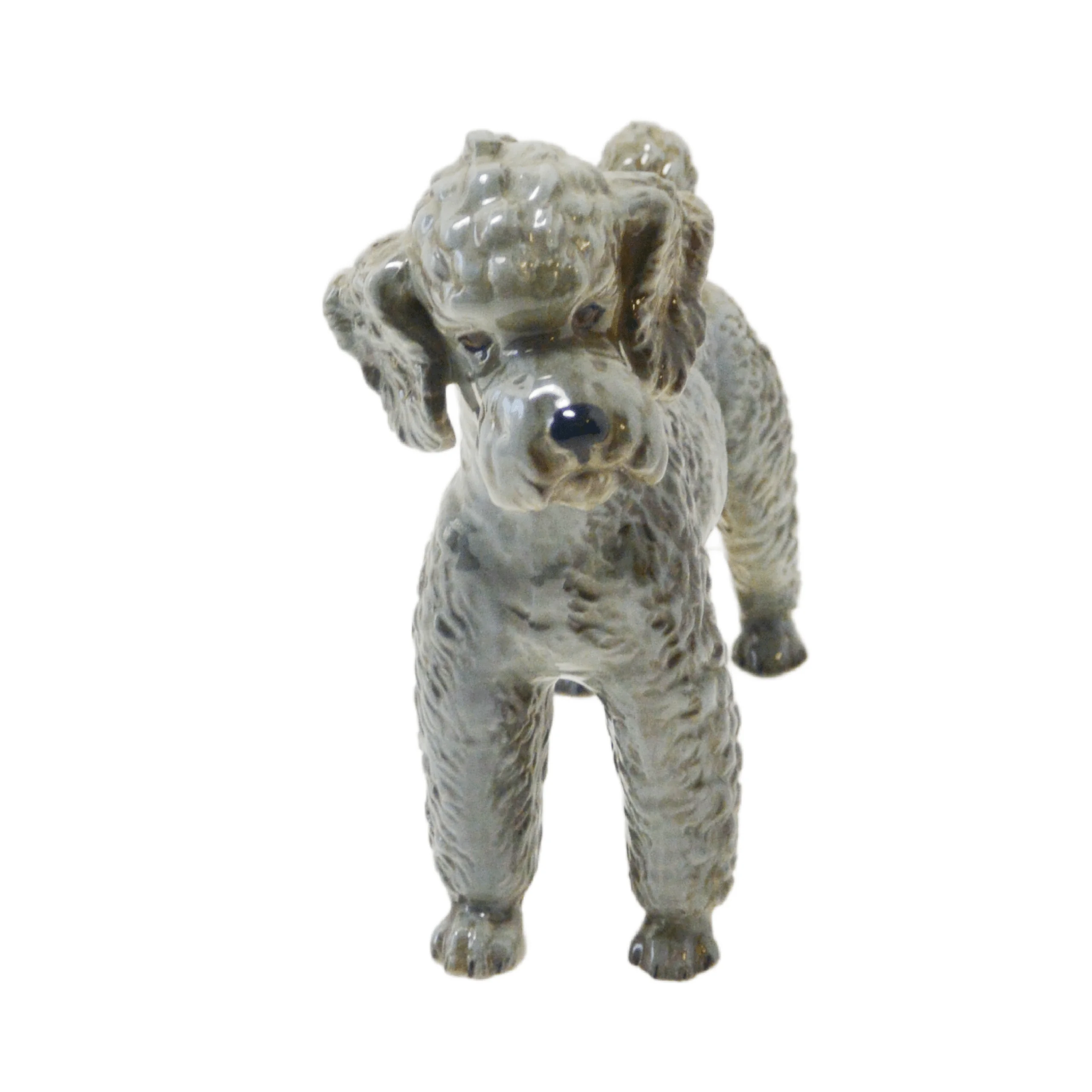 Goebel Grey Poodle |
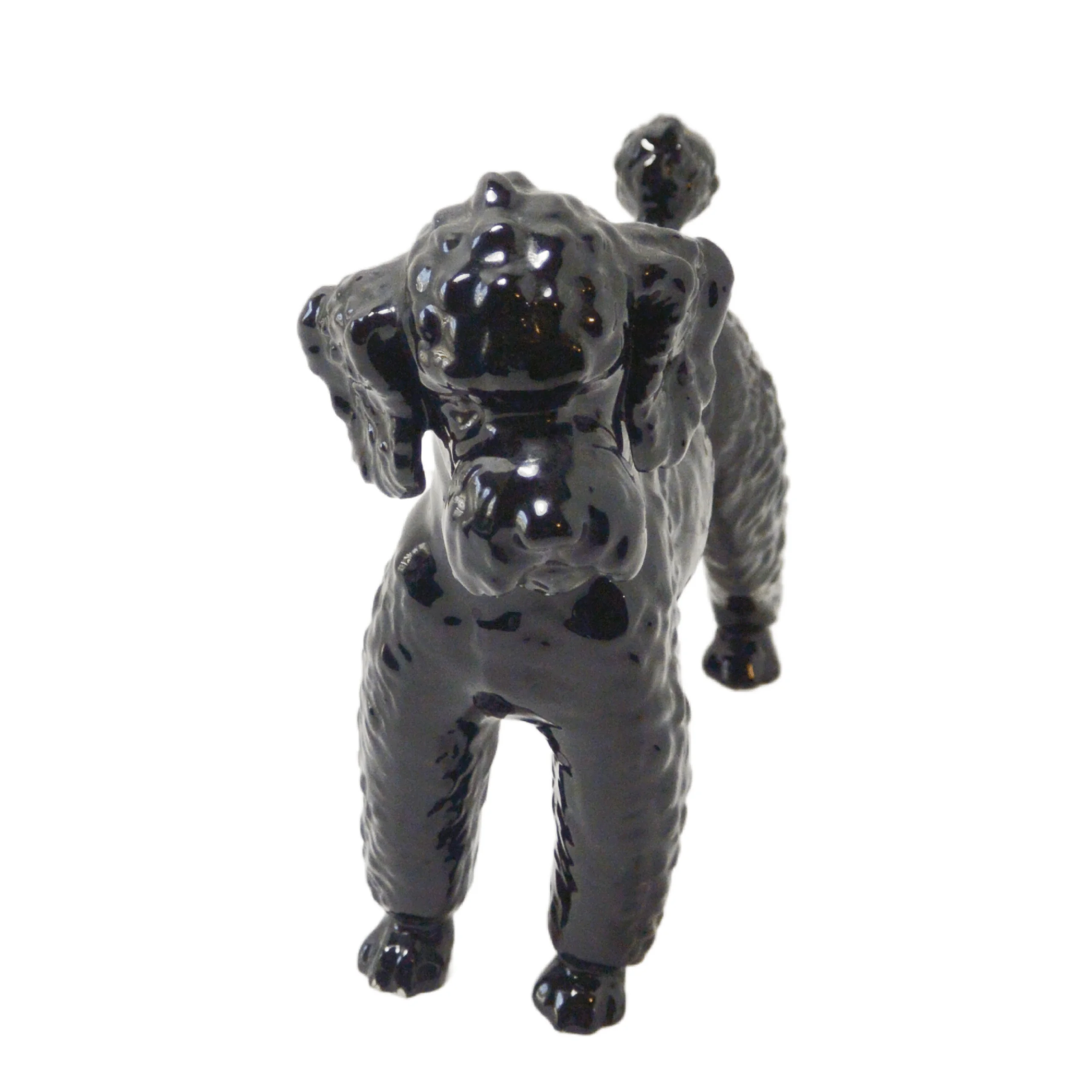 Goebel Black Poodle |
Royal Doulton: Britain’s Best-Loved Dog Figurines
No guide to European porcelain dogs would be complete without Royal Doulton. While technically British rather than Continental, Royal Doulton is one of the most important names in the world of dog figurines — and their HN series is legendary.
Frederick Daws and the Dogs of Character
Royal Doulton employed some remarkable animal sculptors, including Frederick Daws whose lifelike dog figurines set a standard that’s never really been surpassed. The “Dogs of Character” series, inspired by illustrator Cecil Aldin’s beloved drawings, captures each breed’s personality so perfectly that collectors often say these figurines feel like real dogs.
We wrote a whole blog post about this series — read our Royal Doulton Dogs of Character guide here. It’s one of our most popular articles and a must-read if you’re collecting British porcelain dogs.
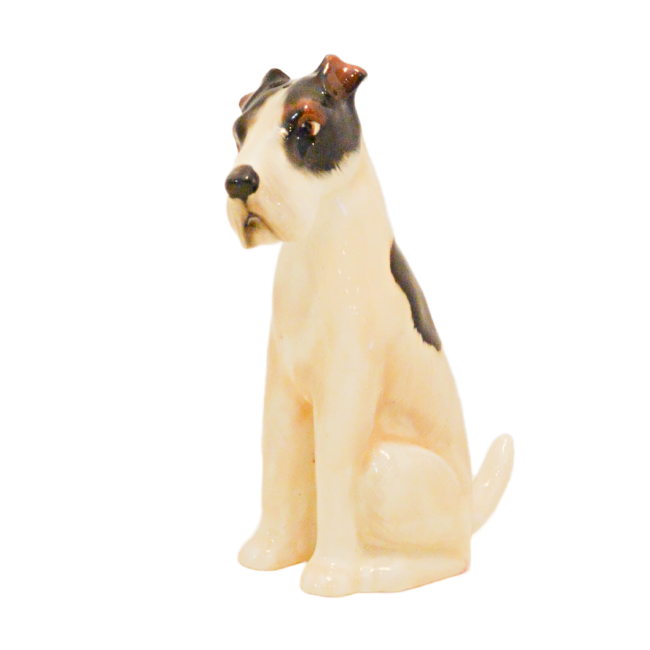 Fox Terrier by Frederick Daws |
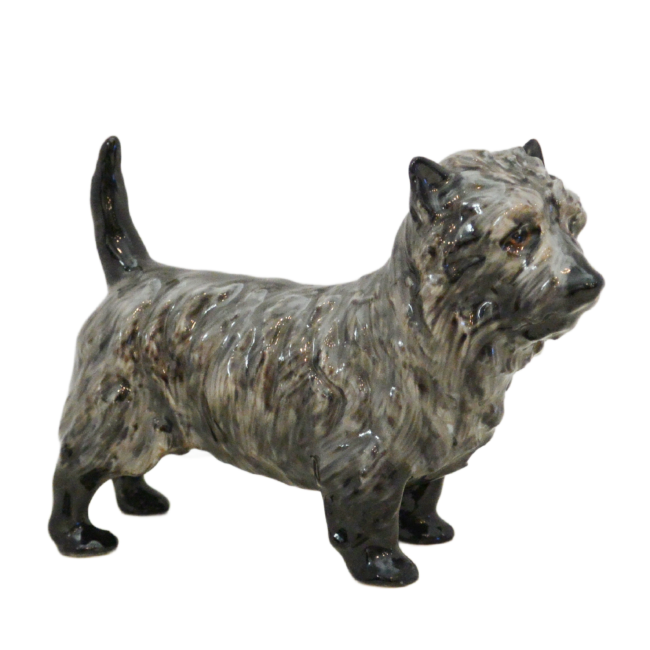 Cairn Terrier HN1035 |
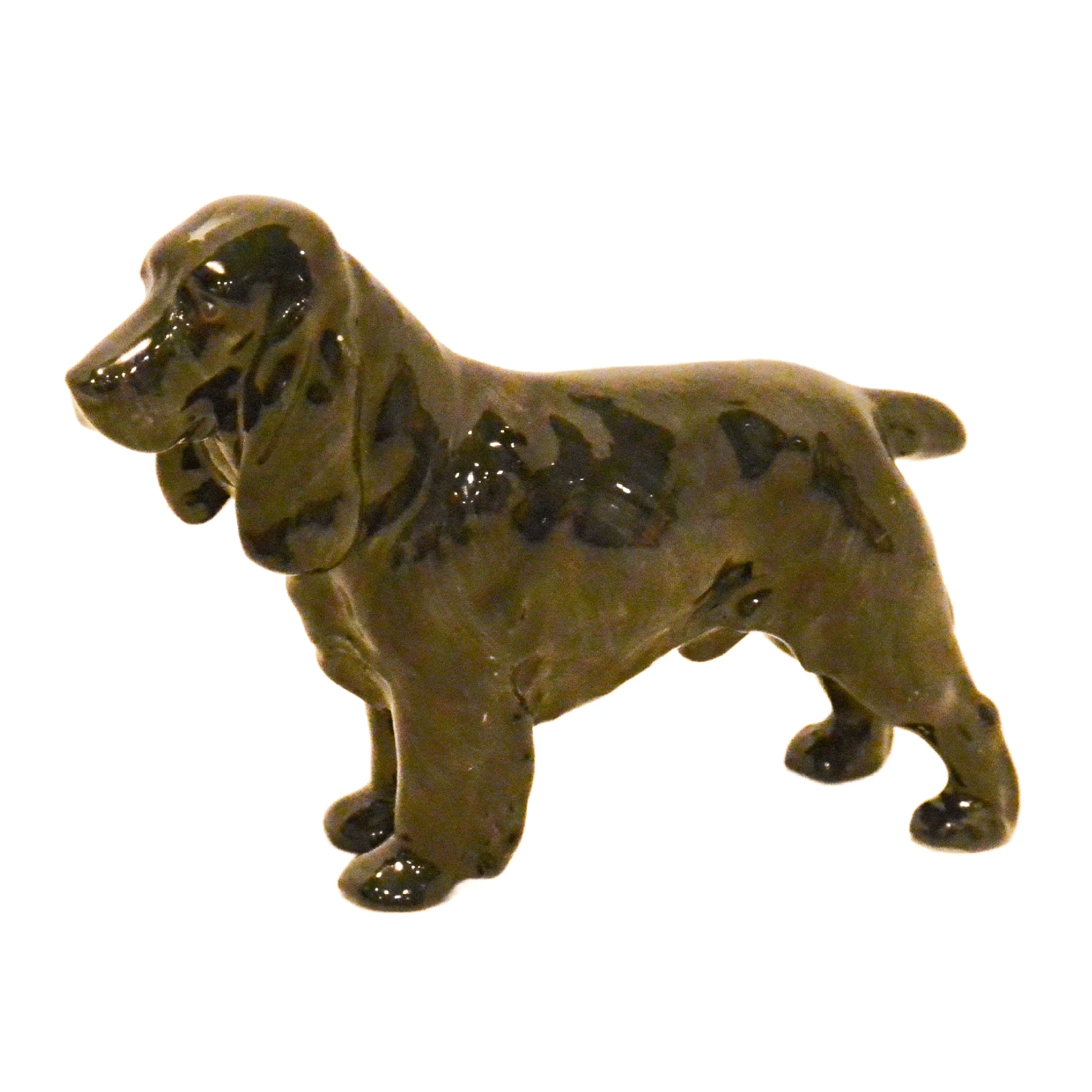 Rare Black Cocker Spaniel |
Other European Makers Worth Knowing
Beyond these major houses, there’s a rich world of European porcelain dog figurines waiting to be discovered.
Hidden Gems from Across the Continent
Royal Dux of Bohemia (now Czech Republic) produced wonderful sporting dog figurines with beautiful earth-toned glazes. Royal Bayreuth is famous for its figural creamers and novelty pieces — their Dachshund creamer is an absolute delight.
Austrian makers like E&R Golden Crown created elegant Borzoi and Greyhound figures. And don’t overlook the smaller German studios like Karl Ens of Thuringia, whose naturalistic bird dogs and terriers are increasingly collectible. These smaller studios are increasingly collectible and gaining recognition among serious collectors.
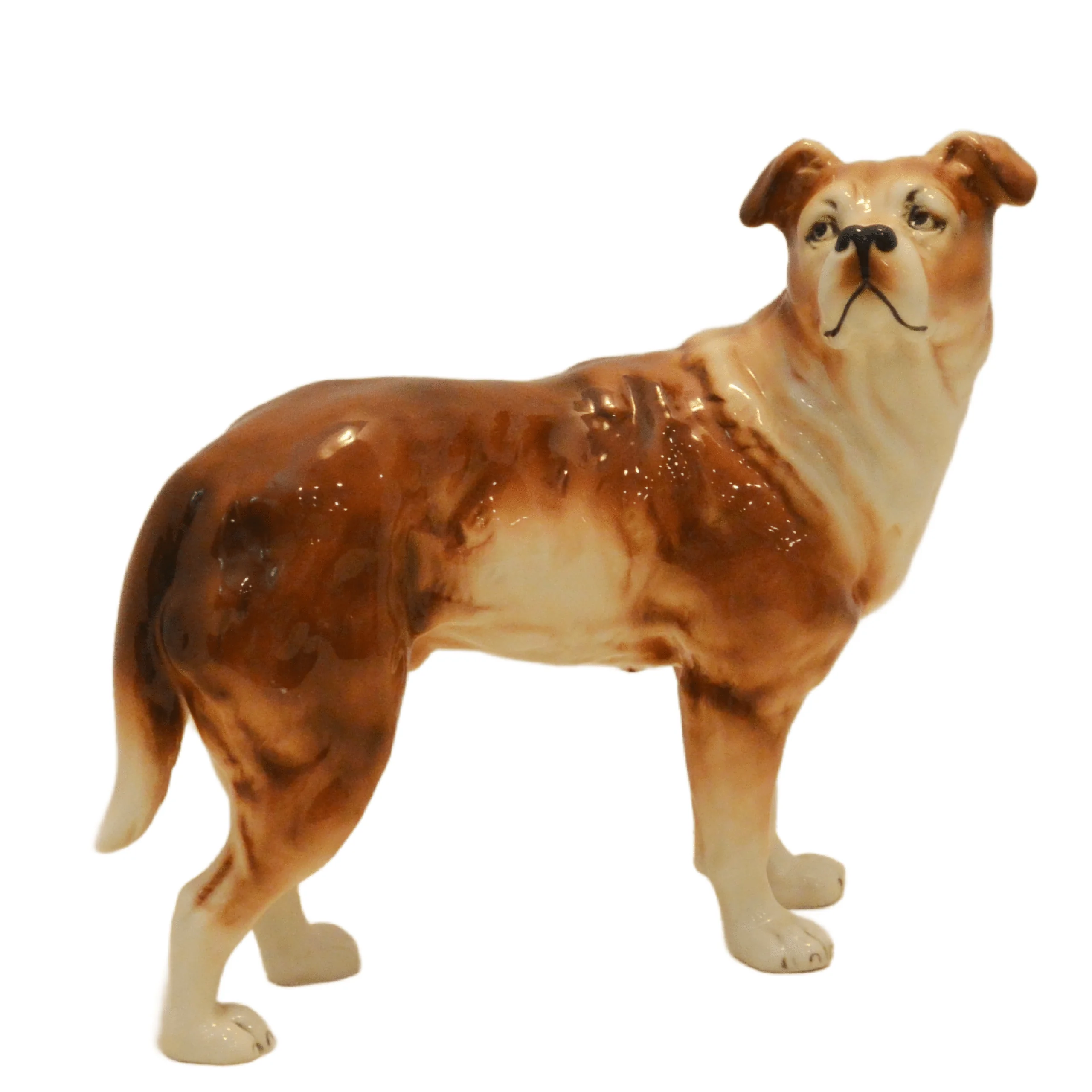 Royal Dux Mastiff |
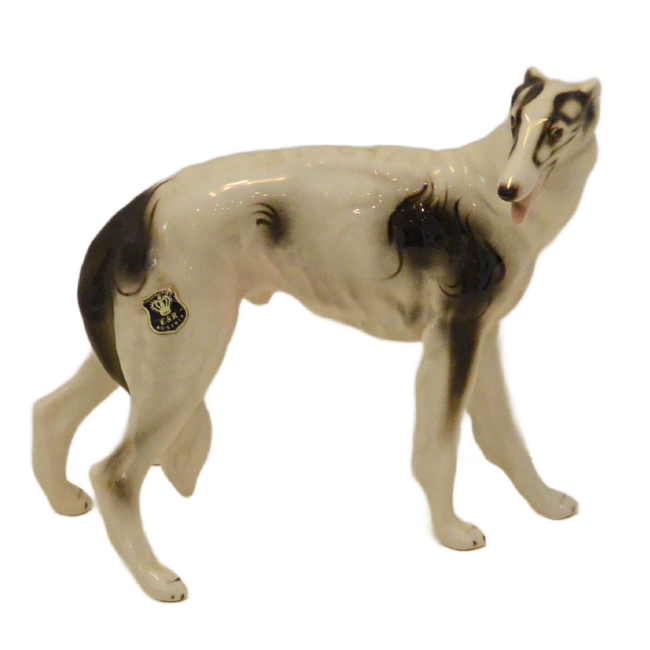 Austrian Borzoi by E&R |
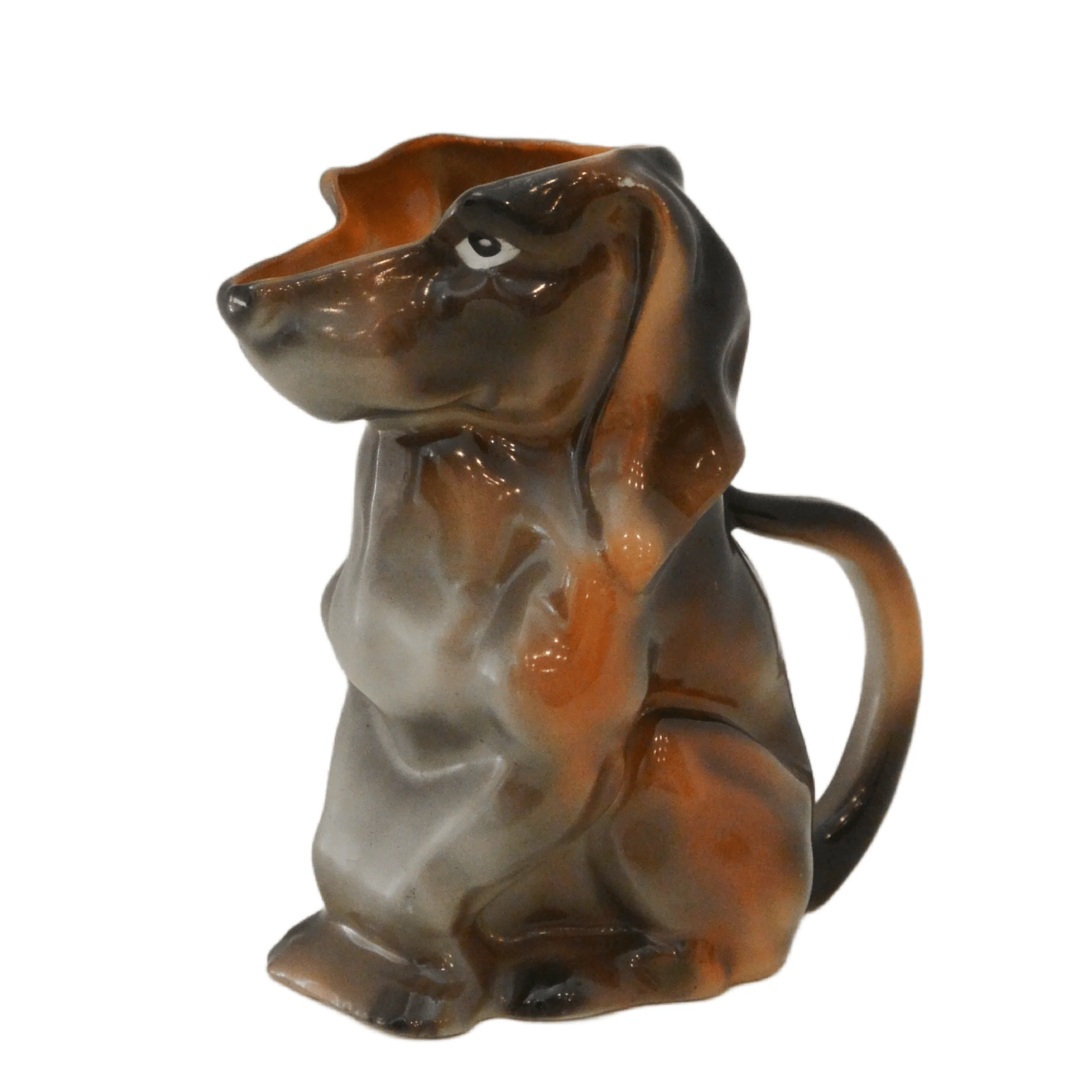 Royal Bayreuth Dachshund Creamer |
How to Spot Makers’ Marks and Authenticate Your Pieces
One of the most rewarding parts of collecting European porcelain is learning to read the makers’ marks — those stamps, incised marks, and painted symbols on the base of each piece that tell you exactly where it came from and when.
Quick Identification Tips
Here are the key markers to look for with each major house:
Rosenthal: Look for “Rosenthal” in script with a crown, plus “Selb-Bavaria” or “Selb Germany.” Green underglaze marks are typical of the classic period.
Hutschenreuther: A lion passant (walking lion) with “Hutschenreuther” and “Selb” or “Hohenberg.”
Royal Copenhagen: Three wavy blue lines painted under the glaze, with a crown above. Model number stamped on base.
Dahl Jensen: “DJ” monogram with “Copenhagen” and “Denmark.” Model number incised.
Goebel: Evolved through many marks over the decades. The classic “V with bee” mark is most recognized. Always includes “W. Germany” or “Germany.”
Royal Doulton: A lion standing on a crown, with “Royal Doulton” and “Made in England.” HN numbers are stamped or printed on the base.
Tools Every Collector Should Have
A good magnifying glass and a reference guide to porcelain marks are invaluable. We recommend Kovels’ New Dictionary of Marks or the Porcelain Marks & More online database — both are excellent resources for identifying pieces in the field. And when in doubt, our team is always happy to help — just reach out to us.
Caring for Your European Porcelain Dogs
These figurines have survived decades — sometimes a century or more — and with a little care, they’ll be around for many more. Here are our top tips for keeping them in beautiful condition:
Cleaning and Display
Dust gently with a soft, dry brush — a clean makeup brush works beautifully. Never put porcelain in the dishwasher. If you need to clean a piece, use lukewarm water with a tiny drop of mild dish soap and dry immediately with a soft cloth.
Avoid direct sunlight for extended periods, especially on pieces with overglaze painted details or gilding. Display on stable surfaces with museum putty or wax underneath to prevent sliding — especially helpful if you have curious pets!
Handling Best Practices
Handle with clean, dry hands. The oils from skin won’t damage porcelain immediately, but over time they can attract dust and leave marks on unglazed surfaces. When moving figurines, always support the base — never lift by a delicate tail, ear, or extended leg.
|
Start or Grow Your Collection With Us
At A Dog’s Tale Collectibles, our team specializes in antique and vintage dog collectibles — and European porcelain figurines are one of our absolute favorite categories. Every piece in our shop has been carefully authenticated, and we’re always happy to share what we know about a piece’s history and provenance.
Whether you’re starting a new collection, adding a special piece to an existing one, decorating your home with something truly unique, or looking for that perfect gift for the dog lover who has everything — we’d love to help you find exactly the right piece.
All of our items ship free within the USA and arrive perfectly protected and beautifully wrapped just for you. Browse our full European porcelain collection here, or drop us a line — we love talking about this stuff!
|
About the Author
Donna O’Connor is co-owner and curatorial lead at A Dog’s Tale Collectibles, where she and her team source, authenticate, and curate antique and vintage dog collectibles from around the world. With years of hands-on experience handling European porcelain figurines from all the major houses, Donna brings a collector’s eye and a genuine love for the artistry behind every piece. She holds each figurine, examines every maker’s mark, and personally selects items for the shop — because she believes every dog collectible should come with a story worth telling.
References & Further Reading
Porcelain Marks & More — Comprehensive online database of European porcelain marks
The Metropolitan Museum of Art: European Porcelain — Historical overview of European porcelain traditions
Kovels’ New Dictionary of Marks: Pottery and Porcelain, 1850 to the Present — Essential reference for identifying makers
Our Blog: Dogs of Character — Royal Doulton — Deep dive into the famous HN series