
Collecting Canines
Aerolux Silhouette Lightbulbs: The Complete Collector’s Guide
What Is an Aerolux Silhouette Lightbulb?
An Aerolux silhouette lightbulb is a decorative neon lamp produced in the United States during the 1930s through the 1950s, featuring a glowing colored silhouette figure suspended inside a glass bulb. When screwed into a standard socket and switched on, the neon-filled outline illuminates in soft amber, gold, or pink — creating a warm, animated effect unlike anything else in the history of decorative lighting. Dog silhouettes are among the most beloved designs in the Aerolux catalog, and they represent one of the most charming crossovers between vintage lighting collectibles and dog collectibles.
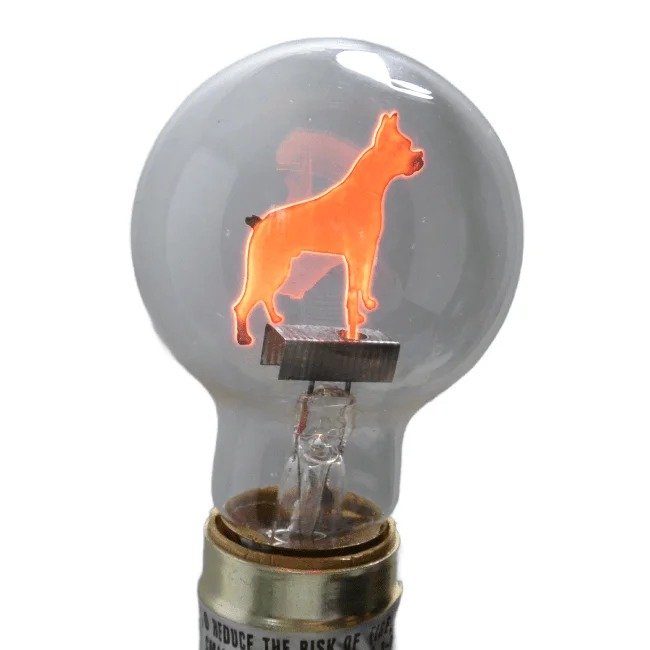
Collectors who discover Aerolux silhouette lightbulbs for the first time tend to describe the same experience: seeing one glowing in a dim room and finding it almost impossibly appealing. The soft neon glow, the stylized silhouette, the Art Deco sensibility — it all comes together into something that is simultaneously functional, decorative, and historically significant.
The History of Aerolux Lighting
Aerolux Light Corporation was based in New York and produced decorative neon lamps from the late 1930s through the 1950s. The company specialized in novelty lamps designed to fit standard household sockets, making their decorative lights accessible to the average consumer at a time when novelty lighting was a genuine home décor trend.
The Aerolux production process involved suspending a pre-formed wire silhouette inside a glass bulb, filling the bulb with neon gas, and sealing it. When current passes through the neon gas, the wire silhouette glows with the characteristic warm light associated with neon signs. The effect was magical enough that Aerolux lamps became popular gifts and display pieces throughout the 1940s and 1950s.
The company produced an extensive range of silhouette designs: cats, horses, flowers, patriotic motifs, holiday themes, and — crucially for dog collectors — a variety of dog silhouettes. Scotties, Poodles, Cocker Spaniels, and more generic dog profiles all appear in the catalog. Some dog designs were produced in larger quantities and are relatively findable today; others appear rarely and command significant premiums.
Dog Designs in the Aerolux Catalog
Dog silhouettes are among the most popular Aerolux designs for collectors, and for good reason — the stylized, graphic quality of the silhouette format suits dog profiles particularly well. The most commonly encountered dog designs include:
The Scottie Dog: Possibly the most iconic Aerolux dog design, the Scottie appears in the classic profile that defined 1940s and 1950s dog motifs across all decorative arts. A glowing Scottie Aerolux lamp is an instant statement piece for any mid-century or Art Deco collection.
The Poodle: The poodle silhouette, often shown in Continental cut, captures the quintessential mid-century fascination with French poodles as a style symbol. These are among the more findable Aerolux dog designs.
The Cocker Spaniel: The long-eared Cocker Spaniel translates beautifully into silhouette form. The drooping ears and rounded body create an immediately recognizable profile that glows warmly in neon.
Generic Dog Profiles: Aerolux also produced more generalized dog silhouettes — a seated dog, a running dog, a dog in profile — that appeal broadly to dog lovers and vintage lighting collectors alike.
Rarer Aerolux dog designs appear occasionally and are highly prized. If you encounter an unusual breed silhouette — a Borzoi, a Greyhound, a Dalmatian — you may be looking at a genuinely scarce piece.
How to Authenticate an Aerolux Silhouette Lightbulb
As with any collectible that commands premium prices, reproductions and fakes do exist in the Aerolux market. Knowing what to look for protects your investment:
The bulb itself: Authentic Aerolux bulbs have a distinctive hand-blown glass quality. The glass may show slight irregularities consistent with period production methods. Modern reproductions often have a more uniform, machine-blown appearance.
The wire silhouette: Inside the bulb, the wire figure should show period-appropriate craftsmanship. The wire is typically copper or a copper alloy, hand-formed into the silhouette shape. Look for slight asymmetries consistent with hand work.
The base: Aerolux bulbs use standard Edison screw bases (E26 in modern terminology). The base should show appropriate aging — slight oxidation, period-appropriate construction. A suspiciously clean, bright base may indicate a reproduction or heavily restored piece.
The glow: If you have the opportunity to test a bulb, authentic Aerolux lamps glow with a warm amber, gold, or pink tone. The color is consistent throughout the silhouette. Uneven glow, flickering, or failure to light may indicate a damaged gas seal — a common issue with aged pieces.
Period markings: Some Aerolux bulbs carry a paper label or ink marking identifying the company. These are often absent after 70+ years, but their presence is a strong authenticity indicator.
Displaying Your Aerolux Dog Lamp
An Aerolux silhouette lightbulb is a display centerpiece, not just a collectible to be stored away. These lamps were designed to be used, and part of their appeal is the experience of seeing them glow. A few display considerations:
Use a low-wattage socket or a dimmer circuit. Aerolux bulbs are sensitive to heat, and operating them at lower voltage extends their life considerably while preserving the soft, warm quality of the neon glow.
Showcase the lamp in partial darkness — a bookshelf alcove, a display cabinet, or a bedside table where the ambient light is low enough to let the neon silhouette do its work.
Pair Aerolux dog lamps with other period dog collectibles for a curated mid-century vignette. A glowing Scottie Aerolux lamp alongside a Mortens Studio Scottie figurine and a Morgan Dennis print creates a cohesive, powerful display.
Caring for an Aerolux Silhouette Lightbulb
Aerolux bulbs are fragile by nature and deserve careful handling. The glass is typically thin, the wire silhouette inside is delicate, and the neon gas seal — if broken — cannot be restored. Treat these pieces with the care you would give to any irreplaceable antique lighting fixture:
Handle from the base, not the glass. Store in padded, rigid containers. Avoid temperature extremes that can stress the glass. If a bulb no longer lights, do not force power through it — a failed gas seal can cause the wire to corrode further and the piece to deteriorate.
For current pricing benchmarks and collector reference, Smithsonian Institution Collections is an invaluable resource for anyone evaluating antique and vintage ceramics.
Frequently Asked Questions About Aerolux Lightbulbs
Are Aerolux lightbulbs still functional?
Many are, with proper care. They operate on standard 120V household current. Use a low-wattage socket and limit operating time to preserve the neon gas charge and extend the life of the piece.
Are reproductions common?
Yes. Modern reproduction Aerolux-style lamps have been produced. Examine the glass quality, wire work, and base construction carefully, and buy from reputable dealers when possible.
Which dog designs are rarest?
Uncommon breed profiles (sighthounds, sporting dogs) are rarest. Scotties and Poodles are most commonly found. Any dog design in excellent working condition commands a premium.
Where can I find authentic Aerolux dog lamps?
Browse our vintage dog collectibles and explore our collection of mid-century modern dog pieces. When Aerolux lamps are available, they are listed individually — each one a one-of-a-kind piece.
Ready to add a handpicked piece to your own collection? Browse our curated selection of vintage dog collectibles — each item chosen for authenticity, condition, and collector appeal.