
Collecting Canines
Mortens Studio Dog Figurines: Collector’s Complete Guide
What Are Mortens Studio Dog Figurines?
Mortens Studio dog figurines are mid-century American ceramic pieces produced between approximately 1940 and 1970, primarily in the United States. Often called simply “Mortens Studio” by collectors, these hand-painted pieces are among the most recognizable American dog figurines ever made — instantly identifiable by their lifelike poses, warm earth-toned glazes, and a distinctive quality issue that paradoxically makes them more interesting to collectors: crazing.
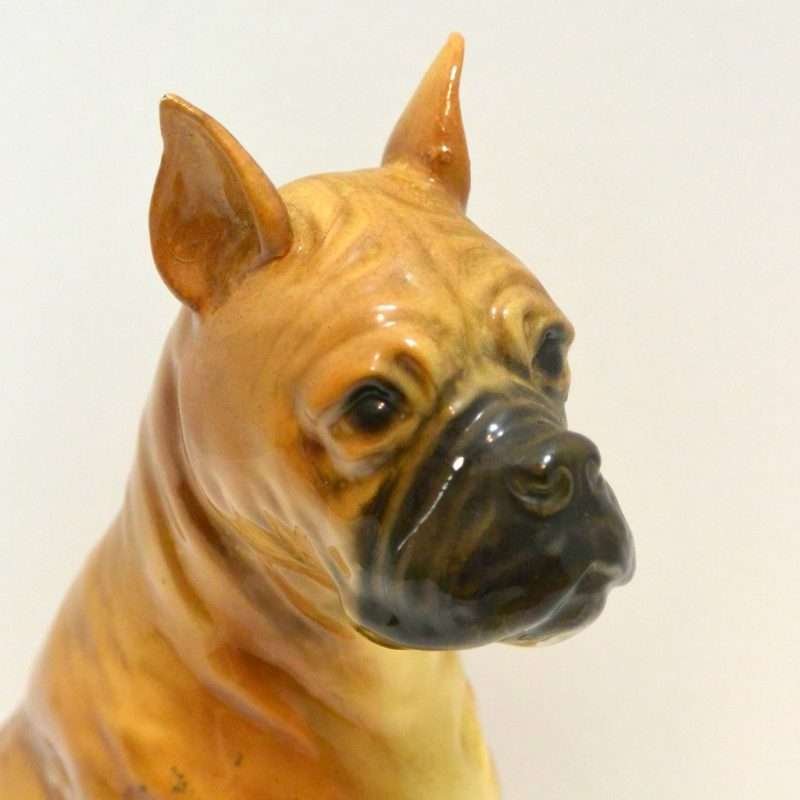
If you have ever held a Mortens Studio dog figurine, you know exactly what makes them special. The weight, the fine detail on the fur, the intensity in the eyes — these pieces were made by craftspeople who clearly loved dogs. That quality, combined with their affordable price point and the enormous variety of breeds produced, has made Mortens Studio one of the most actively collected names in vintage American ceramics.
The History Behind Mortens Studio
Mortens Studio was founded by Reuben Mortens, who brought a European ceramic tradition to the American market at a time when dog ownership and dog culture were booming in postwar America. The studio produced an extraordinary range of dog breeds — from common family favorites like Cocker Spaniels and Beagles to more exotic breeds like Borzois, Afghan Hounds, and Poodles in their elaborate Continental cuts.
What made Mortens Studio distinctive in the American market was the method of construction. The figurines were formed around a metal wire armature — essentially a wire skeleton — which was then built up with ceramic material. This production method allowed for highly naturalistic, dynamic poses that solid-cast figurines could not achieve. The results were remarkable: a Pointer frozen mid-stance, a German Shepherd alert and watchful, a Cocker Spaniel with ears in motion.
The wire armature that gave Mortens Studio pieces their lifelike quality also created their most famous characteristic: over decades, as the metal wire expands and contracts with temperature changes, it causes the ceramic surface to develop a fine network of cracks called crazing. This is not a defect in the traditional sense — it is a natural consequence of the construction method, and virtually all genuine Mortens Studio figurines will show some degree of crazing.
Identifying Authentic Mortens Studio Dog Figurines
Mortens Studio figurines are marked in several ways, and knowing what to look for is essential for collectors. The most common marks include:
- Paper labels: Many pieces were originally labeled with a paper sticker reading “Mortens Studio” with the breed name. These are often missing after decades of handling, but their faint adhesive ghost is sometimes visible on the base.
- Ink stamps: Some pieces carry an ink stamp on the underside. The stamp may read “Mortens Studio” alone or with “Made in USA.”
- Impressed marks: Less commonly, the breed name or a model number is impressed (pressed into the clay before firing) into the base.
Unmarked pieces do appear, and experienced collectors often identify them by the style, the wire armature construction (you can sometimes feel or see the wire if a chip is present), and the characteristic crazing pattern. The glazes on authentic Mortens Studio pieces have a warmth and depth that is difficult to replicate, and the painted details — particularly the eyes — have an expressiveness that sets them apart from later imitations.
The Most Collectible Mortens Studio Breeds
Mortens Studio produced figurines for an enormous number of breeds, and collector demand varies significantly. The most sought-after pieces tend to be:
Wire-Haired Fox Terriers and Scotties — These lively terrier breeds capture perfectly the energy that Mortens Studio sculptors excelled at depicting. Their dynamic poses and high-contrast coloring make them visually striking on a display shelf.
Borzois and Afghan Hounds — The sighthound breeds allowed Mortens Studio to showcase their most elegant sculptural work. The long, flowing lines of these breeds translated beautifully into ceramic, and they remain among the most valuable pieces on today’s market.
German Shepherds and Collies — These working breeds represent some of Mortens Studio’s most accomplished naturalistic work. A well-painted, fully intact German Shepherd in alert pose is one of the gems of the collection.
Poodles in Continental Cut — The poodle, in all its elaborate mid-century glory, appears throughout the Mortens Studio catalog. Continental cut pieces with their distinctive pompom trim are particularly popular.
Puppies and Young Dogs — Mortens Studio produced a number of puppy poses alongside their adult figurines. Puppy pieces tend to be smaller, less expensive, and are often a collector’s entry point into the line.
Understanding Crazing in Mortens Studio Figurines
Crazing deserves its own discussion because it is so central to the Mortens Studio collecting experience. Crazing is not a crack — it is a fine surface network of lines in the glaze layer itself, not the ceramic body. You cannot feel crazing when you run your fingers over a piece, and it does not weaken the figurine structurally. It is, in the context of Mortens Studio, simply an expected feature of the construction method.
Think of crazing as the equivalent of the fine lines on aged leather — a mark of age and character rather than damage. Collectors who understand this embrace light crazing as authenticity. Heavy crazing, or crazing accompanied by actual cracks or chips, does affect value, but moderate crazing on an otherwise intact piece is standard and expected.
Pieces with minimal or no crazing do exist — these are either very early examples, pieces that were carefully stored in stable environments, or occasionally pieces where the wire armature was better insulated. These command a premium on the collector market.
Condition Grading and Value
When evaluating Mortens Studio dog figurines, condition matters enormously. Here is how collectors typically assess a piece:
Excellent: No chips, no repairs, original paint fully intact, minimal or no crazing. These represent the top of the market and are increasingly difficult to find in common breeds and near-impossible in rare ones.
Very Good: Minor crazing, paint 95% or better, no chips to the figurine itself. Small chips to attached elements (tails, ears) may be acceptable depending on severity. This is the most common grade for desirable pieces on today’s market.
Good: Moderate crazing, some paint wear, possibly a minor chip in a less visible location. Still very displayable and collectible, particularly in rare breeds.
Fair/Restored: Visible repairs, significant paint loss, or structural damage. Value is primarily sentimental; these pieces are best appreciated as display items rather than investments.
How to Display and Care for Mortens Studio Figurines
Mortens Studio dog figurines display beautifully and are among the most versatile pieces in a collection. A few display and care notes:
Keep pieces away from direct sunlight, which can fade the painted details over time. Avoid extreme temperature swings, which accelerate the metal wire expansion/contraction cycle and can worsen existing crazing. Dust gently with a soft brush — water and liquid cleaners can penetrate the crazed glaze and cause discoloration.
Grouping Mortens Studio figurines by breed creates a visually satisfying display, and mixed arrangements with other American mid-century ceramics work well given the warm, earthy color palette. These figurines look particularly striking on wooden shelves or in glass-fronted cabinets where their three-dimensional quality can be fully appreciated.
For current pricing benchmarks and collector reference, Kovels’ Antiques Price Guide is an invaluable resource for anyone evaluating antique and vintage ceramics.
Frequently Asked Questions About Mortens Studio
Are all Mortens Studio figurines marked?
No. Many pieces lost their paper labels over time. Look for the ink stamp on the base, or learn to identify the characteristic style, construction, and glaze quality.
Does crazing affect value?
Light crazing is standard and expected — it does not significantly affect value. Heavy crazing combined with cracks or paint loss does reduce value. Pristine pieces with no crazing command a premium.
What breeds are rarest?
Sighthound breeds (Borzoi, Afghan, Greyhound) and less common working breeds tend to be rarest. Common family breeds like Cocker Spaniels are easiest to find.
How do I know if a piece has been repaired?
Examine under UV light — most repairs fluoresce differently than original ceramic and glaze. A blacklight is a useful tool for any serious collector.
Where can I find authentic Mortens Studio dog figurines?
Our Mortens Studio collection is updated regularly with hand-picked, condition-graded pieces. You can also explore our full range of vintage dog figurines and mid-century modern dog collectibles for related finds.