
Collecting Canines
Royal Doulton Dog Figurines: HN Numbers, Breeds & Collector’s Guide
Royal Doulton Dog Figurines: A Century of British Ceramic Artistry
Royal Doulton dog figurines represent over a century of British ceramic artistry, spanning from the late nineteenth century to the present day. Among the most widely collected dog figurines in the world, Royal Doulton’s canine subjects combine the technical excellence of fine English bone china with an artistic tradition that has always taken dogs seriously — as subjects worthy of careful sculptural attention, not merely decorative afterthoughts.
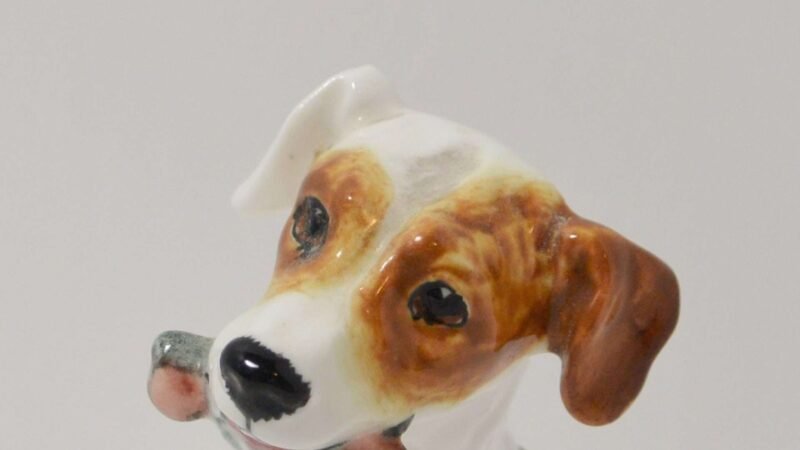
Whether you are a seasoned Royal Doulton collector navigating HN numbers, a dog lover who wants a figurine of your breed, or a collector new to the world of antique dog figurines, Royal Doulton is likely to be one of the first names you encounter — and for good reason. The range is vast, the quality is high, and the history is rich with fascinating connections to British dog culture.
A Brief History of Royal Doulton
John Doulton founded his Lambeth pottery in 1815, and the company that bears his name has been producing ceramic objects ever since. The “Royal” designation came in 1901, when King Edward VII granted the company the right to use the royal warrant — recognition of the quality that had made Doulton wares known throughout the British Empire.
Dog figurines entered the Royal Doulton catalog seriously in the early twentieth century, when the Burslem factory in Staffordshire became the center of figurine production. The famous HN numbering system — standing for Harry Nixon, the artist who supervised early figure painting — was established in 1913 and has been used to catalogue every Royal Doulton figure ever since. Dog figurines received their own numbers within this system, and serious collectors use HN numbers as the definitive reference language.
Understanding HN Numbers for Royal Doulton Dogs
The HN numbering system is the cornerstone of Royal Doulton collecting, and understanding it is essential for navigating the market. Every Royal Doulton figure — dog, human, or otherwise — received a unique HN number upon introduction. Dog figurines have their own ranges within the overall sequence, and knowing the number allows you to precisely identify a piece, confirm its production dates, and assess its relative rarity.
Key points about HN numbers for dog collectors:
Numbers are permanent: Once assigned, an HN number stays with a specific figure design regardless of color variations. Color variants are typically noted by additional designations (HN 1038A, for example) rather than entirely new numbers.
Number ranges suggest era: Lower HN numbers (below 1000) indicate pre-1940 production; numbers in the 1000–2000 range generally span the 1940s–1970s; higher numbers reflect later production. This is a rough guide, not an absolute rule, but it helps with initial dating.
Reference resources: The Royal Doulton Collectors’ Club maintains comprehensive HN records. Charlton Standard Catalogue of Royal Doulton Figurines is the standard reference volume for serious collectors. Cross-referencing any HN number with these resources confirms identification and production history.
The Cecil Aldin Connection
One of the most historically interesting aspects of Royal Doulton’s dog figurine program is the connection to Cecil Aldin (1870–1935), the beloved British illustrator whose dog paintings and drawings defined popular ideas about canine character and warmth for an entire generation of English readers.
Royal Doulton produced a series of “Dogs of Character” figurines based on Cecil Aldin’s illustrations — bringing his expressive, warmly humorous dog characters into three-dimensional ceramic form. These pieces capture Aldin’s signature quality: dogs with genuine personality, caught in natural moments that feel observed rather than posed. The Aldin-inspired pieces are among the most sought-after Royal Doulton dog subjects for collectors who appreciate the literary and artistic history of the connection.
Popular Royal Doulton Dog Breeds and Series
Royal Doulton’s dog catalog is extensive, and certain breeds and series attract particular collector attention:
Bulldogs: The English bulldog is practically a Royal Doulton institution. The seated bulldog in various sizes and colorways has been in continuous production for decades and is one of the most instantly recognizable Royal Doulton canine subjects.
Cocker Spaniels: The most popular companion breed of mid-century Britain naturally appears throughout the Royal Doulton catalog. Cocker Spaniels in various poses, sizes, and color variants represent some of the most available and collectible dog subjects in the range.
Scottish Terriers: The Scottie dog was a cultural phenomenon in mid-century Britain and America, and Royal Doulton captured this enthusiasm with a range of Scottie figures in various sizes and poses. The Scottie in its seated upright pose, in particular, is a classic.
Character dogs: Beyond specific breeds, Royal Doulton produced a range of “character” dog figures that prioritized personality and humor over breed accuracy — a scruffy terrier-type dog scratching an ear, a sleepy dog curled on a cushion. These pieces reflect the Aldin influence and are beloved for their warmth.
Authenticating Royal Doulton Dog Figurines
The Royal Doulton market is well-established enough that fakes do circulate, particularly for high-value older pieces. Authentication essentials:
The backstamp: Every genuine Royal Doulton piece carries a backstamp on the base. The format of this stamp evolved over the decades — understanding period-correct backstamp formats is the first line of authentication. The HN number should appear in the backstamp alongside the Royal Doulton mark.
Bone china quality: Genuine Royal Doulton is produced in fine bone china — a very white, translucent material with a distinctive ring when tapped. Reproductions are often in earthenware or a lower-quality porcelain that lacks this translucency.
Paint quality: Royal Doulton’s painting quality, even on more commercial later pieces, is recognizably skilled. Color is carefully applied, details are crisp, and the overall execution reflects professional ceramic painting. Crude or uneven painting is a red flag.
For current pricing benchmarks and collector reference, Wikipedia: Royal Doulton is an invaluable resource for anyone evaluating antique and vintage ceramics.
Frequently Asked Questions About Royal Doulton Dog Figurines
How do I look up a Royal Doulton HN number?
The Charlton Standard Catalogue is the comprehensive reference. The Royal Doulton Collectors’ Club also maintains records and can assist with identification.
Are older Royal Doulton dogs more valuable?
Generally yes, particularly pre-1940 pieces in excellent condition. However, rarity within any period matters more than age alone — a scarce 1960s figure in perfect condition can exceed a common 1930s figure in poor condition.
What is “Dogs of Character”?
A series of Royal Doulton figures based on the illustrations of Cecil Aldin, featuring expressive, personality-driven dog subjects rather than straightforward breed portraits.
Where can I find authentic Royal Doulton dog figurines?
Browse our Royal Doulton dog figurines collection and explore our full range of English dog collectibles. Every piece is individually listed with condition notes and HN number where applicable.
Ready to add a handpicked piece to your own collection? Browse our curated selection of antique dog figurines — each item chosen for authenticity, condition, and collector appeal.