
Collecting Canines
Collecting Vintage Dog Figurines: A Beginner’s Complete Guide
Why Collect Vintage Dog Figurines?
Collecting vintage dog figurines is one of the most accessible and rewarding entry points into the broader world of antique decorative arts. Unlike many collecting categories that require significant capital, specialist knowledge from the outset, or a narrow focus to make progress, collecting vintage dog figurines offers something for almost every budget, every taste, and every level of knowledge — and it rewards deeper learning over time.
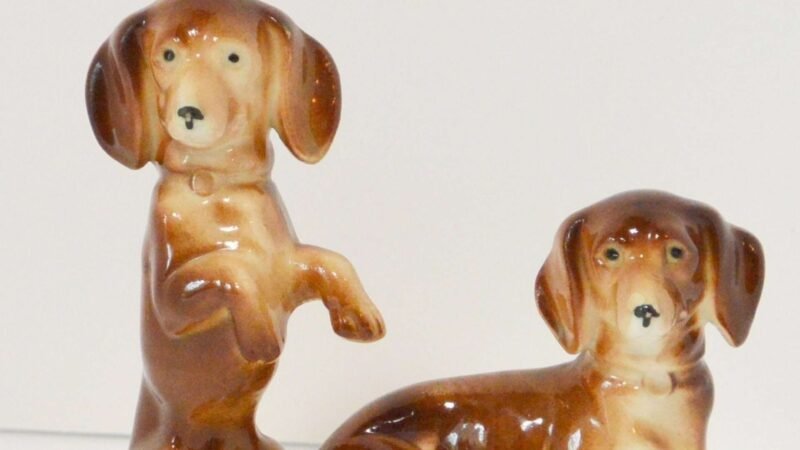
The appeal is straightforward: dogs are universally loved, the objects made to represent them span centuries of ceramic and sculptural tradition, and the range of pieces available — from a few dollars to a few thousand — means that a satisfying collection can be built at any price point. The more you learn, the more interesting the field becomes.
Where to Begin: Choosing a Focus
The most common mistake new collectors of vintage dog figurines make is collecting too broadly at first. Every piece looks appealing; every breed, every material, every era seems interesting. This is understandable, but it makes for an unfocused collection and a slower rate of learning.
A more effective approach is to choose a focus — at least initially — and learn it deeply. Natural focus points include:
By breed: If you own a particular breed, collecting figurines of that breed gives every piece personal resonance. Breed-specific collecting also creates a natural narrative arc — understanding which makers produced your breed, across which periods, and at what quality levels.
By maker: Focusing on a single manufacturer — Goebel, Beswick, Mortens Studio, SylvaC — allows you to develop expertise quickly. You learn the marks, the quality standards, the range of subjects, and the price levels for one body of work, which makes you a more confident buyer and a better judge of condition and authenticity.
By era: Art Deco, Victorian, mid-century American — choosing an era connects your dog collecting to broader art historical context and often creates a visually coherent collection with a strong aesthetic identity.
By material: Porcelain, chalkware, cast iron, bronze — material-focused collecting develops deep knowledge of one category and often reveals connections across makers and periods that broader collecting misses.
Learning to Identify Vintage Dog Figurines
The base mark is the starting point for identifying any vintage dog figurine. Most major manufacturers applied a mark — a painted, printed, or impressed mark on the underside of the piece — that identifies the factory. Learning to read these marks is the single most important skill a new collector can develop.
Key resources for learning marks include Geoffrey Godden’s Encyclopaedia of British Pottery and Porcelain Marks (for English pieces), Eric Knowles’ Miller’s Antiques Handbook & Price Guide (broad reference), and the online database at Gotheborg.com (particularly strong for European porcelain marks). For American pieces, including Mortens Studio and chalkware, specialist collector guides are available through collector societies and online communities.
Condition: The Collector’s Most Important Skill
Learning to assess condition accurately is more valuable than almost any other skill for a beginning collector of vintage dog figurines. Condition drives value more than almost any other factor, and the ability to spot chips, cracks, repairs, and paint loss — and to understand how each affects value — is what separates confident buyers from those who make expensive mistakes.
Practical condition assessment skills:
Look before you buy: Examine every piece from multiple angles under good lighting. Chips are easy to miss in bad light or at a single angle.
Use a UV blacklight: A blacklight reveals repairs and repainting that are invisible to the naked eye in normal light. This is the tool that professionals use, and it is affordable — a basic UV torch costs under $15 and pays for itself immediately.
Ask about repairs: Reputable sellers disclose repairs. If a seller cannot or will not confirm whether a piece has been repaired, that is a red flag.
Building a Collection Over Time
The best collections of vintage dog figurines are built over years, not acquired all at once. The collecting process — searching, learning, occasionally making mistakes, developing relationships with dealers and other collectors — is itself part of the value. Each piece added to a collection should represent a decision made with more knowledge and confidence than the last.
Buy the best quality you can afford rather than accumulating quantity. A small collection of excellent pieces is more satisfying, more valuable, and more interesting than a large collection of mediocre ones. Quality also holds its value better over time.
For current pricing benchmarks and collector reference, Kovels’ Antiques Price Guide is an invaluable resource for anyone evaluating antique and vintage ceramics.
Frequently Asked Questions About Collecting Vintage Dog Figurines
How much should I spend when starting out?
Start with pieces in the $25–$100 range while you are learning. This allows you to handle many pieces, make some mistakes inexpensively, and develop your eye before committing significant money.
What are the biggest mistakes new collectors make?
Buying without checking condition carefully; not researching base marks; collecting too broadly without a focus; and overpaying for common pieces while not recognizing rare ones.
Are reproductions a significant problem?
For common pieces, less so. For high-value pieces — early Meissen, significant Royal Doulton, signed bronzes — reproductions and fakes do exist. The answer is learning to authenticate, not avoiding the category.
Where can I find vintage dog figurines to buy?
Browse our curated vintage dog figurines collection, sorted by breed, maker, and era. We describe condition honestly and source for quality.