
Collecting Canines
Vintage Dog Figurine Display Ideas: How Collectors Style Their Pieces
Vintage Dog Figurine Display Ideas That Actually Work
Vintage dog figurine display ideas are easy to find in theory but harder to execute well in practice — until you understand a few principles that experienced collectors have worked out over years of trial, error, and living with their collections. These are those principles, distilled into practical guidance for displays of any size.
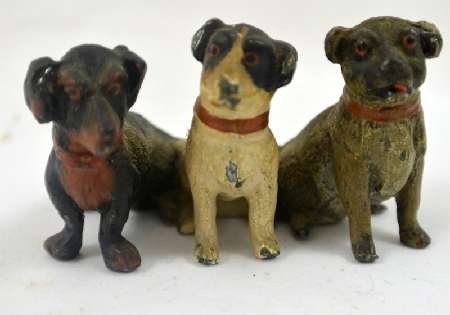
Whether you have a single shelf, a dedicated display cabinet, or a whole room’s worth of pieces to arrange, the ideas here will help you style your vintage dog figurines in a way that shows each piece at its best and tells a coherent visual story about your collection.
The Three-Layer Display Method
The most reliably effective method for displaying vintage dog figurines on shelving is the three-layer approach: tall pieces at the back, medium pieces in the middle, and small or lying pieces at the front. This ensures every piece is visible, creates visual depth and interest, and prevents the flat, one-dimensional look of arrangements where all pieces are the same height.
Achieving height variation without it, use risers — acrylic display risers (essentially invisible), stacked books covered in cloth, small wooden blocks, or purpose-made display stands. Museum supply companies sell high-quality risers in standard sizes; collector supply websites often offer risers specifically sized for ceramic figurines.
The “Triangle” Arrangement Principle
Interior designers use a triangular arrangement principle for grouping objects: place items at three different heights so the eye moves naturally around the group rather than scanning flat across a uniform line. This works beautifully with vintage dog figurines.
In practice: a taller standing piece on one side, a medium-height seated piece in the middle-back, and a smaller lying or puppy piece on the other side at the front creates a satisfying visual triangle. The rule works with almost any combination of breeds and makers, as long as the size relationship creates the triangle shape.
Displaying by Theme: Ideas That Work
The breed collection display: All your pieces of one breed together. This is the most personally meaningful arrangement for breed enthusiasts and creates an immediately legible display statement. A shelf of twelve Scotties across five different makers and three eras tells a rich visual story about both the breed and the collecting tradition.
The “mantelpiece pair” arrangement: The Victorian and Edwardian tradition of displaying a matched pair of figurines on either side of the mantelpiece clock — or flanking a mirror, or bookending a section of books — never really goes out of style. Matched pairs of Staffordshire spaniels, Art Deco Scotties, or any symmetrical pair create a formal, polished effect that works in almost any interior context.
The “maker showcase” display: All your Goebel pieces on one shelf, all your Beswick on another. This approach works particularly well in a glass-fronted cabinet with distinct shelves for each maker. It is how museum and gallery displays tend to be organized, and it has the same clarifying effect on a private collection.
The mixed-era composition: Deliberately mixing Victorian, Art Deco, and mid-century pieces in a single arrangement, unified by breed or material. This approach requires a stronger organizational principle to work — the pieces must share something (the same breed, a dominant color palette, a similar scale) that makes the mixture feel intentional.
Using Color in Vintage Dog Figurine Displays
Color is one of the most powerful tools in display, and vintage dog figurines offer a surprisingly rich palette to work with:
The classic cream and rust of Staffordshire spaniels, the bold blacks and golds of Art Deco pieces, the warm earth tones of Mortens Studio, the cool Scandinavian greys and blues of Royal Copenhagen — these color families can be used to organize displays across maker and era lines, creating visual coherence from diverse collections.
Try grouping by color family within a display space: all warm pieces (ambers, rusts, terracottas) together; all cool pieces (blues, greys, whites) together. The result is often more visually unified than grouping by any other principle.
Lighting Makes the Display
No display idea works without appropriate lighting. The single highest-impact improvement most collectors can make to an existing dog figurine display is upgrading the lighting:
Warm-spectrum LED strip lighting inside a glass-fronted cabinet transforms the display. Warm accent lighting (a small picture light or directional lamp) aimed at an open shelf arrangement does the same. Raking light from the side reveals the sculptural quality of three-dimensional pieces in ways that flat overhead lighting never does. Cool or harsh lighting flattens glaze quality and washes out the painted detail that makes fine figurines worth displaying.
For current pricing benchmarks and collector reference, The Spruce: Display Tips is an invaluable resource for anyone evaluating antique and vintage ceramics.
Frequently Asked Questions About Dog Figurine Display
How do I display a very large collection without it looking overwhelming?
Edit. Not every piece needs to be on display simultaneously. Rotate pieces in and out seasonally — pieces stored carefully come back looking fresh, and the displayed collection stays manageable and visually interesting.
What do professional collectors do differently?
They use better lighting, more intentional grouping, and more negative space. They edit more aggressively. And they invest in good display furniture — a quality glass cabinet pays for itself in enjoyment and protection.
Where can I find more pieces to add to my display?
Browse our curated vintage dog figurines collection by breed, era, and maker. Every piece is one of a kind.