
Collecting Canines
Vintage Dachshund Figurines: Goebel, Beswick & the Collector’s Complete Guide
Vintage Dachshund Figurines: The Collector’s Guide to Goebel, Beswick & Beyond
Vintage dachshund figurines are among the most charming and universally appealing pieces in dog collecting, and for a simple reason: no breed has been more consistently beloved by ceramicists and sculptors across a century of figurine production. The dachshund’s elongated form, expressive face, and endlessly variable personality made it a natural subject for makers from Goebel to Beswick, from Royal Copenhagen to Mortens Studio — and the result is a collecting category rich enough to sustain a lifetime of focused pursuit.
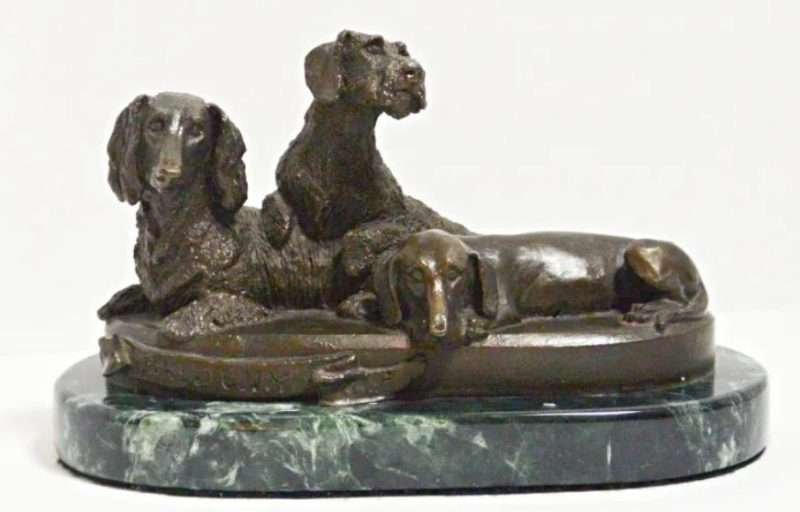
Whether you own a dachshund and want to find figurines that match, or you simply love the breed as a decorative subject, vintage dachshund figurines offer extraordinary variety in quality, material, price point, and maker — a range that accommodates both the beginning collector and the seasoned specialist.
Goebel Dachshund Figurines
Goebel is among the most important makers of vintage dachshund figurines, and their output spans nearly a century of production. The W. Goebel Porzellanfabrik, founded in Bavaria in 1871, is best known internationally for the M.I. Hummel figures produced under license from Sister Maria Innocentia Hummel — but their animal figurine program is equally accomplished and in some ways more interesting for the dedicated dog collector.
Goebel dachshund figurines appear in a wide range of sizes and poses — seated, standing, lying, alert, and at rest. The quality of the painting varies across the production history, with the finest pieces showing careful attention to the dachshund’s characteristic smooth or wire-haired coat, expressive eyes, and the slightly mournful set of the face that gives the breed so much of its appeal.
Goebel marks evolved significantly over the decades, and the mark on any piece can help date production with reasonable precision. The “crown WG” mark dates from before 1935; the “V and bee” marks appear in various forms from the late 1930s onward; later pieces carry “Goebel” in script with or without “West Germany” or “Germany” country marks. The TMK (trademark) reference system used by Hummel collectors applies to all Goebel production and is useful for dachshund pieces as well.
Beswick Dachshund Figurines
John Beswick & Sons, the Staffordshire pottery that operated from 1894 through its absorption into Royal Doulton in the 1960s, produced some of the finest naturalistic dog figurines made in England, and their dachshund subjects are particularly accomplished. Beswick’s animal figures are characterized by a quality of observed naturalism — you can tell these were sculpted by people who spent time watching real animals — and their dachshund pieces capture the breed’s personality with remarkable fidelity.
Beswick dachshunds typically appear in smooth-coated form and range from small seated figures to full standing poses. The glazes are typically high-quality, the painting crisp, and the overall execution clearly represents the quality end of English ceramic animal figures. Beswick pieces from the pre-Royal Doulton period (before the 1960s acquisition) are generally considered most desirable, though the quality remained high for many years after.
Beswick marks include the “Beswick England” backstamp that appears in various formats across the production history. Model numbers are sometimes stamped alongside the mark and can be referenced against collector guides to confirm identification and dating.
Royal Copenhagen and Scandinavian Dachshunds
The Scandinavian ceramic tradition produced dachshund figurines of extraordinary quality, and Royal Copenhagen’s examples are among the finest in any material. Characterized by the restrained, naturalistic quality that defines the best Scandinavian animal ceramics — careful anatomy, subtle color gradation, glazes of exceptional depth — Royal Copenhagen dachshunds are among the most refined pieces in the collecting category.
Bing & Grøndahl, Royal Copenhagen’s great rival, also produced notable dachshund figurines in the same naturalistic tradition. Dahl Jensen, the smaller Danish firm discussed separately in our Dahl Jensen guide, produced dachshund subjects of comparable quality.
American Vintage Dachshund Figurines
American production is represented most prominently by Mortens Studio, whose wire-armature ceramic dachshunds have a lifelike quality that reflects the manufacturer’s commitment to naturalistic dog portraiture. Mortens Studio dachshunds appear in both smooth and wire-haired coat varieties, in multiple sizes, and with the characteristic crazing that identifies the wire-armature construction method.
Josef Originals, another American manufacturer active from the 1940s through the 1980s, produced a range of dog figurines including dachshunds in their characteristic pastel-glazed style. These pieces are charming rather than strictly naturalistic and attract collectors who appreciate their mid-century American aesthetic.
Identifying Vintage Dachshund Figurines by Maker
The base mark is the starting point for any identification. Key points for the most common makers:
Goebel: Use the TMK (trademark) system to date production. The “crown WG” mark indicates pre-1935. “V and bee” marks span 1935–1979 in various forms. Newer marks post-1990 are generally less desirable for vintage collectors.
Beswick: “Beswick England” in gold or green script. Model numbers if present allow cross-reference with published catalogs.
Royal Copenhagen: Three wavy lines mark, typically in underglaze blue. Sometimes accompanied by “Royal Copenhagen” and/or “Denmark.”
Mortens Studio: Paper label (often missing), ink stamp, or impressed mark on base. The wire armature construction and characteristic crazing are often the most reliable identification.
For current pricing benchmarks and collector reference, AKC: Dachshund Breed Information is an invaluable resource for anyone evaluating antique and vintage ceramics.
Frequently Asked Questions About Vintage Dachshund Figurines
What is the most valuable vintage dachshund figurine?
Value is determined by maker, condition, and rarity within a maker’s catalog. Eighteenth-century Meissen dachshunds are at the top of the market; fine Scandinavian pieces in perfect condition follow. Common Goebel examples in good condition are accessible and actively traded.
Are smooth-coated or wire-haired dachshunds more common in figurines?
Smooth-coated dachshunds dominate figurine production. Wire-haired representations exist but are less common and typically more sought-after in most makers’ catalogs.
How do I tell a Goebel dachshund from a generic German figurine?
The Goebel mark is reliable when present. Without a mark, the quality of the painting — particularly the eyes and coat detail — and the modeling quality help distinguish Goebel from lesser German manufacturers.
Where can I find vintage dachshund figurines?
Browse our dachshund collectibles collection and explore our full makers catalog. Our team sources pieces specifically for collectors who love this breed.