
Collecting Canines
Antique Dog Figurine Sets: Pairs, Families & Matching Collections
The Appeal of Antique Dog Figurine Sets and Pairs
Antique dog figurine sets — matched pairs, family groupings, and multi-piece compositions — hold a special place in the collecting world. Where a single figurine tells one story, a pair or set creates a relationship: two Staffordshire spaniels facing each other across a mantelpiece, a mother and puppy composition from Beswick, a matched brace of Pointers from a fine German factory. The visual and emotional impact of matched pieces amplifies everything that makes a single figurine appealing.
The tradition of paired dog figurines is centuries old. Ceramic factories discovered early that matching pairs sold better than singles — the human tendency to complete a set is powerful, and pairs have the visual symmetry that works naturally in domestic display contexts, particularly the mantelpiece arrangement that has been a feature of European and American homes since the eighteenth century.
Types of Antique Dog Figurine Sets
Matched facing pairs: The classic format — two identical or near-identical figurines, one facing left and one facing right, designed to flank a central object on a mantelpiece or shelf. Staffordshire spaniels are the most famous example of this format, produced in matching pairs across the nineteenth century. The visual impact of a well-matched pair is considerably greater than either piece alone.
Mother and puppy compositions: Groups showing an adult dog with one or more puppies represent some of the most charming multi-piece compositions in the antique figurine world. Beswick, Goebel, and Royal Copenhagen all produced mother-and-puppy groups of high quality. These pieces are typically more valuable than equivalent single-dog figurines because the composition requires more sculptural work and more production complexity.
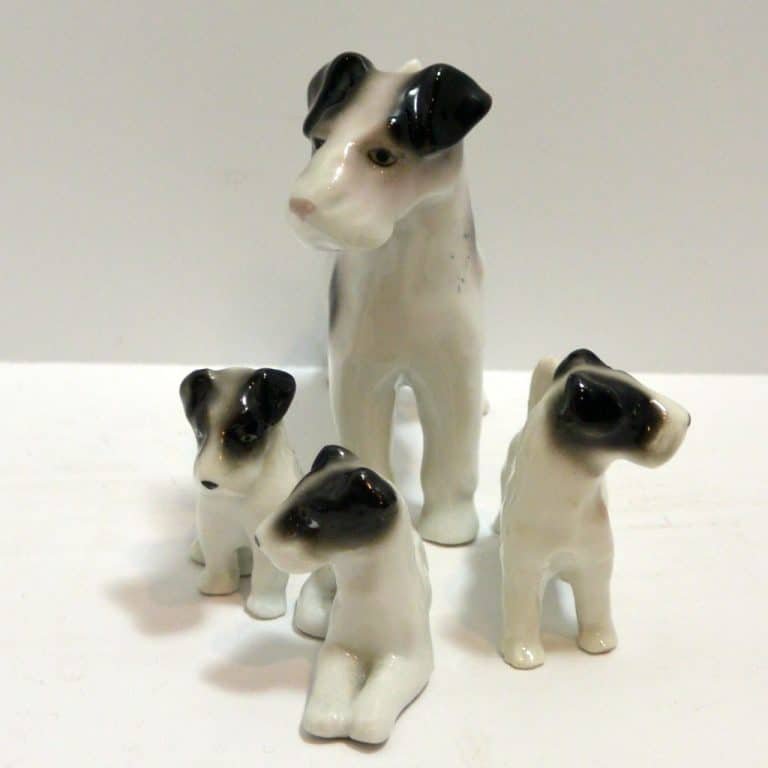
Family groups: Extended family compositions — two adults and multiple puppies — are among the rarest and most sought-after antique dog figurine sets. The combination of sculptural complexity and the emotional warmth of the family subject makes these pieces very appealing to collectors.
Kennel or scene compositions: Some factories produced figurines showing dogs in a setting — a dog with a kennel, dogs at a bowl, a pair of hunting dogs with game. These scenic compositions are typically single-piece castings but represent a multi-subject within one object.
Bookend pairs: Dogs as bookend figures — a matched pair designed to hold books between them — were produced in ceramic, cast iron, and bronze from the late nineteenth century onward. These functional-decorative objects are actively collected as both dog figurines and as examples of their respective material traditions.
Finding and Matching Pairs
One of the pleasures and challenges of collecting dog figurine pairs is that the two pieces of a matching pair are often separated over decades of ownership and may need to be reunited through searching. A determined collector who has one Staffordshire spaniel from an original pair may spend years searching for the facing figure — and the satisfaction of completing the pair is genuine.
Key considerations when evaluating potential pairs: the two pieces should match in scale, glaze quality, and painting style. Small variations are normal in period hand-production, but significant differences in size, color, or quality may indicate pieces from different production runs or even different factories.
Caring for Multi-Piece Sets
Multi-piece sets require additional care in display and storage — keeping the pieces together and in appropriate spatial relationship is part of preserving the set’s integrity. Document the complete set photographically in its display arrangement. When packing for storage or transport, pack components separately to prevent contact damage, but keep them together and labeled as a set.
For current pricing benchmarks and collector reference, Kovels’ Price Guide is an invaluable resource for anyone evaluating antique and vintage ceramics.
Frequently Asked Questions About Antique Dog Figurine Sets
Are a matched pair worth more than twice a single piece?
Generally yes — matched pairs typically command a premium above twice the single price, reflecting the additional scarcity of finding two matching pieces in similar condition.
How can I tell if two pieces were originally made as a pair?
Look for matching marks, equivalent scale, similar glaze batches (color may match more or less precisely), and complementary poses (one left-facing, one right-facing for mantelpiece pairs). Consultation with a specialist can confirm pairing for high-value examples.
Where can I find antique dog figurine pairs and sets?
Browse our antique dog figurines collection — we specifically note pairs and sets in our listings and source matched pieces as a priority.
Ready to add a handpicked piece to your own collection? Browse our curated selection of antique dog figurines — each item chosen for authenticity, condition, and collector appeal.