
Decorating with Dogs
Art Deco Dog Figurines: Style, Makers, and Collecting Guide
What Are Art Deco Dog Figurines?
Art Deco dog figurines are ceramic, bronze, or mixed-media sculptures produced primarily between 1920 and 1940, reflecting the geometric boldness, stylized elegance, and sophisticated color sensibility that defines the Art Deco movement. Of all the subjects that Deco artists and manufacturers embraced, dogs were among the most successful — the clean lines of breeds like the Borzoi and the Greyhound were practically made for the Deco aesthetic, and the status that certain breeds carried in interwar society made them natural luxury objects.
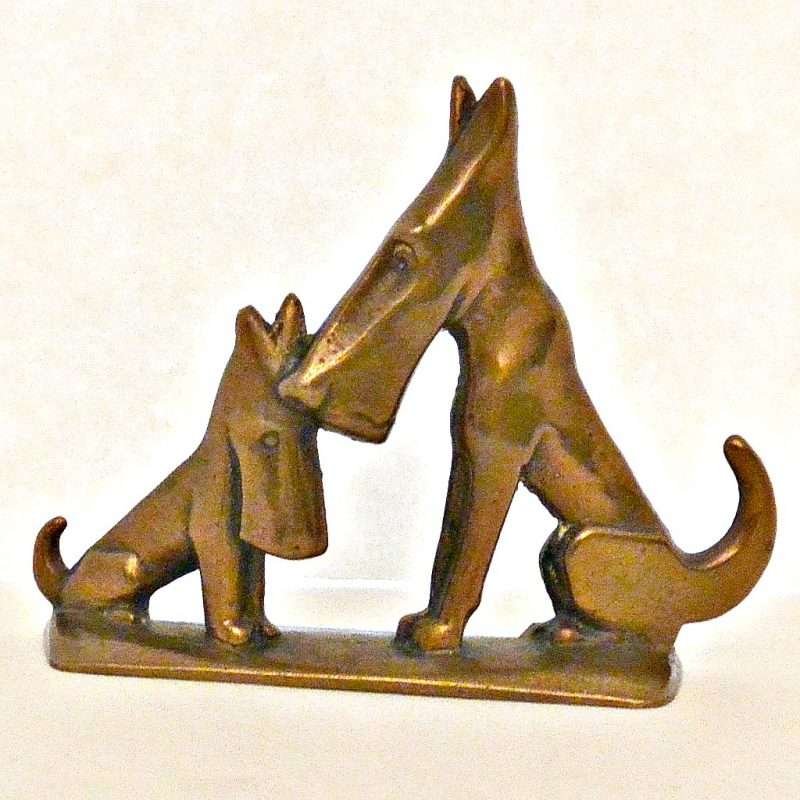
For collectors today, Art Deco dog figurines represent some of the most visually striking pieces in the entire dog collectibles world. A Deco Borzoi in stylized bronze, a geometric porcelain poodle from a German factory, a glazed French ceramic greyhound — these pieces have not merely aged well. They have become more desirable as Art Deco itself has been reappraised as one of the great decorative arts movements of the twentieth century.
The Art Deco Movement and Its Relationship with Dogs
The Art Deco movement emerged in the early 1920s as a reaction against the organic curves of Art Nouveau and the perceived excesses of Victorian decoration. Deco embraced geometry, luxury materials, bold color contrasts, and a modernity that reflected the dynamism of the interwar period. Dogs — particularly sleek, elegant breeds — fitted perfectly into this aesthetic vision.
Two breeds more than any others defined the Art Deco dog: the Borzoi (Russian Wolfhound) and the Greyhound. Both breeds combine speed, elegance, and an elongated silhouette that translates naturally into Deco’s preference for stylized, attenuated forms. Both were also fashionable companion and racing animals among the wealthy European and American circles that drove Art Deco taste. Images of these breeds — in sculpture, in print, on ceramics — appear throughout the movement’s decorative arts output.
Other breeds also appear prominently in Deco dog figurines: the Scottie (whose angular, compact form suited geometric interpretation perfectly), the Afghan Hound (like the Borzoi, all flowing lines and aristocratic bearing), the Poodle (fashionable, theatrical, endlessly stylizable), and the Saluki (exoticism and elegance combined, reflecting Deco’s fascination with the ancient world).
Key Makers of Art Deco Dog Figurines
Art Deco dog figurines were produced across Europe and the United States, and knowing the key makers helps collectors navigate the market:
Goldscheider (Austria/USA): The Goldscheider factory, founded in Vienna in 1885, became one of the defining makers of Art Deco ceramic figures. Their dog figurines combine technical excellence with the bold stylization that defines the best Deco ceramics. Look for the Goldscheider mark on the base — oval with the factory name.
Rosenthal (Germany): German manufacturer Rosenthal produced such ceramic figures of exceptional quality, often working with significant sculptors. Their pieces range from relatively restrained naturalistic work to fully stylized Deco compositions, depending on the artist and period.
Royal Dux (Czechoslovakia): Royal Dux produced striking Deco-influenced animal figurines, including a range of elegant dog subjects. Their characteristic pink applied mark and the quality of their porcelain make identification generally straightforward.
French bronze and composite manufacturers: French ateliers produced Art Deco dog figures in bronze, spelter (zinc alloy), and various composite materials. Makers including Max Le Verrier and Irenée Rochard produced strikingly modern dog sculptures — greyhounds, borzois, and sighthounds in dynamic poses — that are among the most sought-after Deco animal sculptures today.
English potteries: Sylvac, Wade, and other English potteries produced more affordable Art Deco-influenced dog figurines in glazed earthenware. Less expensive than the European fine porcelain examples, these pieces are accessible entry points to Art Deco dog collecting.
Identifying Genuine Art Deco Dog Figurines
The Art Deco designation is sometimes applied too broadly to pieces that are simply old rather than genuinely Deco in style. Genuine these decorative pieces have specific visual and material characteristics:
Date of production: True Art Deco falls between approximately 1920 and 1940. Pieces made later in “Deco revival” styles are different in collector value, though they may be appealing in their own right.
Stylization: Genuine Deco pieces show deliberate stylization — the naturalistic detail of the Victorian era is subordinated to geometric form, pattern, and elegance of line. A Deco Greyhound is recognizably a greyhound, but its form has been refined, elongated, and simplified toward an ideal.
Color palette: Art Deco favored bold, contrasting colors — black and gold, ivory and black, vivid single-color glazes against white grounds. Period-appropriate glazes and color combinations support the Deco attribution.
Base marks: Research the specific factory mark on any piece you are considering. Major Deco manufacturers are well-documented, and authentic marks are specific to the factory and period.
Displaying Art Deco Dog Figurines
such antique collectibles are statement pieces that deserve prominent display. Their bold forms and rich colors work best with some space around them — crowding Deco pieces diminishes their visual impact. A single Borzoi on a lacquer console table, a pair of Scottie bookend figures flanking a row of books, a greyhound bronze as the focal point of a mantelpiece arrangement — these are the kinds of display contexts where these vintage ceramics make their greatest impact.
For current pricing benchmarks and collector reference, Wikipedia: Art Deco is an invaluable resource for anyone evaluating antique and vintage ceramics.
Frequently Asked Questions About Art Deco Dog Figurines
Which breeds are most commonly found in Art Deco?
Borzois, Greyhounds, Scotties, Afghans, and Poodles dominate the period. These were the fashionable breeds of the interwar era, and their forms translated perfectly into the Deco aesthetic.
How do I tell a genuine Deco piece from a later reproduction?
Examine the base mark, the material quality, the color palette, and the stylization. Research the specific factory if a mark is present. UV light can reveal later repairs or touch-up that might affect dating.
Are bronze Deco dog figures more valuable than ceramic ones?
Generally yes — signed bronzes by known sculptors (Le Verrier, Rochard) command significant premiums. Spelter (zinc alloy) pieces, often confused with bronze, are less valuable. Ceramic Deco pieces vary enormously depending on maker, condition, and subject.
Where can I find authentic these charming pieces?
Browse our Art Deco dog collectibles and our curated antique dog figurines collection. We specialize in the specific pieces that serious collectors look for — one of a kind, condition-described, and curator-selected.
Ready to add a handpicked piece to your own collection? Browse our curated selection of vintage dog collectibles — each item chosen for authenticity, condition, and collector appeal.